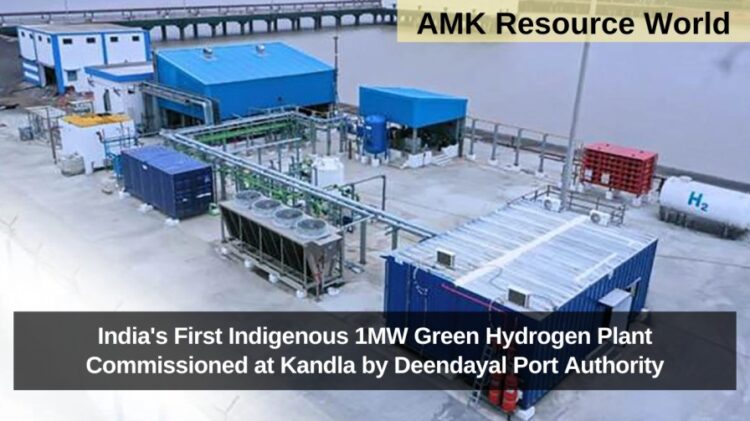
In a historic stride towards India’s green energy ambitions, the Deendayal Port Authority (DPA) has successfully commissioned the country’s first indigenous 1MW green hydrogen plant at Kandla Port, Gujarat. This achievement marks a major milestone in the nation’s transition towards a low-carbon economy and underscores its commitment to clean energy and sustainable maritime infrastructure.
This pioneering initiative, under the Make in India banner, is set to revolutionize port operations by introducing green hydrogen — a clean, renewable, and efficient energy source. Developed entirely with indigenous technology, the plant not only reinforces India’s self-reliance in energy innovation but also places the country on the global map for maritime decarbonization efforts.
The 1MW plant is just the beginning. The Deendayal Port Authority has ambitious plans to expand capacity to 10MW by the next fiscal year. In its initial phase, the green hydrogen produced will be used to power port buses and lighting systems, reducing reliance on fossil fuels and lowering carbon emissions. Eventually, the vision is to use green hydrogen as the primary energy source for all port operations, including heavy machinery, cargo handling, and other port-related logistics.

This development is aligned with the Government of India’s National Green Hydrogen Mission, which aims to make India a global hub for the production, usage, and export of green hydrogen. The initiative also supports the country’s Panchamrit goals announced at COP26, including achieving net-zero carbon emissions by 2070 and meeting 50% of its energy needs through renewable sources by 2030.
Union Minister of Ports, Shipping and Waterways, Sarbananda Sonowal, lauded the Deendayal Port Authority for taking this transformational step. He emphasized that such initiatives are not just environmentally critical but also economically strategic, as they open doors to green employment opportunities, reduce energy import dependence, and promote innovation in port and logistics sectors.
The commissioning of the green hydrogen plant also signals India’s growing commitment to sustainable port management practices. With global shipping accounting for nearly 3% of total carbon emissions, the transition of ports to clean energy is essential. By adopting hydrogen-based solutions, Kandla Port has become a model for other Indian ports to emulate.
Moreover, the plant’s commissioning is expected to act as a catalyst for public-private partnerships (PPP) and further investments in green hydrogen infrastructure across India. It sets the stage for the creation of a green maritime ecosystem, paving the way for hydrogen-powered vessels, eco-friendly ship refueling stations, and integrated renewable energy grids at ports.
In conclusion, the Deendayal Port Authority’s indigenous 1MW green hydrogen plant is a trailblazing achievement that exemplifies India’s sustainable growth vision. As the facility scales to 10MW and beyond, it will not only support cleaner operations at Kandla but will also steer India’s ports and maritime industry toward a greener, more resilient future.