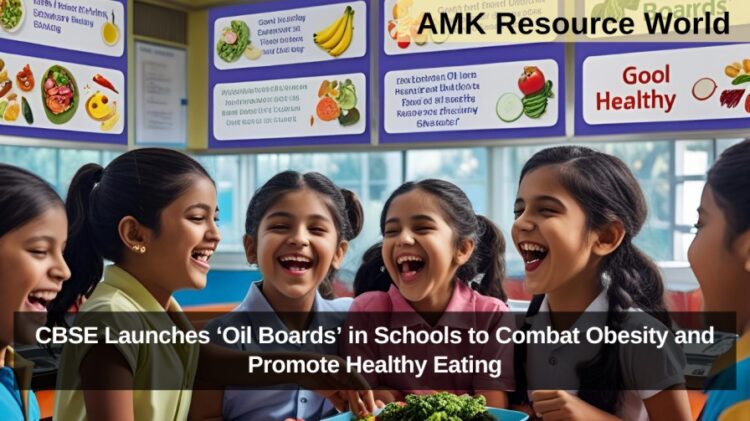
After the successful rollout of ‘Sugar Boards’ to curb excessive sugar intake, the Central Board of Secondary Education (CBSE) has now expanded its health awareness campaign by introducing ‘Oil Boards’ across affiliated schools. This initiative is aimed at educating students and staff about the dangers of consuming unhealthy fats and oils, thereby promoting more conscious dietary choices.
WHAT ARE OIL BOARDS?
As per the official circular, Oil Boards are posters or digital displays placed in common areas of schools such as cafeterias, lobbies, and staff meeting rooms. These visuals are intended to inform and remind school communities about the risks associated with high-fat diets, especially those involving trans fats and saturated oils. The boards will feature scientifically-backed health messages to instill awareness and promote behavioural change.
WHY THIS INITIATIVE?
The CBSE’s push for Oil Boards comes in response to alarming statistics on obesity in India. Drawing from the National Family Health Survey (NFHS-5, 2019–21), the Board highlighted that over 20% of adults in urban India are overweight or obese. A 2025 Lancet study further projected that the number of overweight and obese adults in the country could skyrocket from 18 crore in 2021 to nearly 45 crore by 2050. Such data places India on track to have the second-highest obesity burden in the world.

Unhealthy eating habits, especially in school environments where processed and fried foods are easily accessible, have been identified as major contributors to this trend. The CBSE aims to counter this through preventive education and encouraging healthier lifestyles from an early age.
ACTION PLAN FOR SCHOOLS
The CBSE has directed all affiliated schools to implement the initiative through the following steps:
- Install Oil Boards (static or digital) in high-traffic school zones to communicate the dangers of oil overconsumption.
- Print health messages related to fat consumption and obesity prevention on official stationery like letterheads, envelopes, and school publications.
- Promote healthy meals and physical activity, encouraging nutritious food options and organizing activities like stair use, short exercise breaks, and walking clubs.
STUDENT PARTICIPATION IS KEY
Importantly, schools are encouraged to involve students in designing the Oil Board content. By making it part of classroom projects, students can research the impact of unhealthy oils, draft awareness messages, and create posters or digital graphics. This fosters creativity while deepening their understanding of nutrition and health.
With the introduction of Oil Boards, CBSE strengthens its commitment to holistic student development—balancing academic success with physical well-being, for complete guidelines CLICK HERE