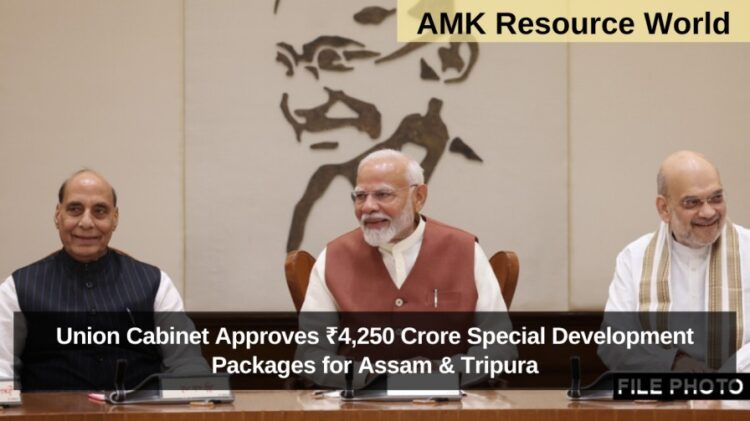
In a significant move aimed at accelerating inclusive growth in the North Eastern region, the Union Cabinet, chaired by Prime Minister Narendra Modi, has approved four new components under the Central Sector Scheme of Special Development Packages (SDPs) for Assam and Tripura. With a total central outlay of ₹4,250 crore, the initiative focuses on infrastructure development, livelihood generation, and socio-economic upliftment of marginalized and conflict-affected communities.
The newly approved components specifically target areas inhabited by Adivasi communities, Dimasa groups, ULFA-affected populations in Assam, and tribal communities in Tripura. The fund allocation includes:
- ₹500 crore for Adivasi-inhabited areas in Assam.
- ₹500 crore for Dimasa-inhabited regions within the North Cacher Hills Autonomous Council.
- ₹3,000 crore for development in ULFA-affected areas of Assam.
- ₹250 crore for tribal development initiatives in Tripura.
The overall project outlay stands at ₹7,250 crore, comprising ₹4,250 crore from the central scheme and an additional ₹3,000 crore contribution from the Assam State Government. The implementation will span five financial years, from FY 2025–26 to FY 2029–30, ensuring long-term, sustained development impact.
According to official sources, the scheme will generate large-scale employment, foster skill development, and promote tourism, entrepreneurship, and infrastructure creation in some of the most underdeveloped pockets of the two states. Women and youth are expected to be among the primary beneficiaries, with targeted interventions for capacity building, self-help group (SHG) strengthening, and vocational training.

This announcement builds upon the success of earlier Ministry of Home Affairs-led Special Development Packages designed for the Bodo and Karbi groups, which had a measurable impact in improving peace, governance, and economic opportunities in those areas. The government’s approach combines physical infrastructure projects—such as roads, schools, and healthcare facilities—with soft skill initiatives aimed at integrating communities into mainstream economic activities.
For Assam, the packages will address regions that have historically faced socio-political unrest and economic marginalization. Investments in agriculture, agro-processing, eco-tourism, and small-scale industries are expected to open new income avenues, reduce migration, and foster stability. Special emphasis will be given to tourist infrastructure to attract both domestic and international visitors, capitalizing on Assam’s rich natural and cultural heritage.
In Tripura, the ₹250 crore tribal development component will focus on improving connectivity, education, and health infrastructure in remote areas, alongside livelihood support programs for forest-based and artisanal trades. These initiatives aim to bridge the development gap between tribal and non-tribal populations, ensuring equitable growth.
By targeting historically disadvantaged and conflict-affected communities, the new SDPs are expected to strengthen peacebuilding efforts, enhance social cohesion, and integrate these regions more effectively into the broader national economy.
The Union Cabinet’s decision reflects a broader strategy to make the North East a hub of cultural tourism, skilled manpower, and sustainable industries—laying a strong foundation for long-term prosperity and stability in the region.