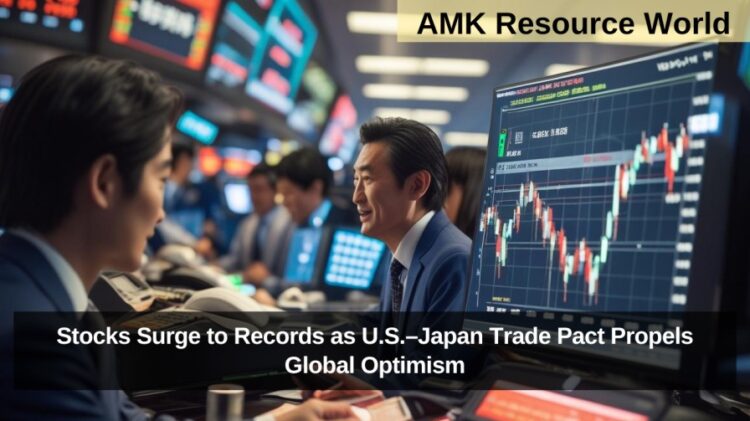
Wall Street extended its record-breaking run as major U.S. stock indices climbed even higher, buoyed by optimism stemming from a pivotal trade agreement between the world’s largest economy, the United States, and Japan, the fourth-largest. Investors have been closely tracking trade developments, and this breakthrough deal delivered the positive momentum markets sought heading into the final days of July.
The S&P 500, already riding historic highs, edged up yet again, closing at fresh records alongside the Nasdaq Composite. Dow Jones gains remained strong, though the index hovered just shy of a new peak. The market’s mood was notably upbeat: futures reflected optimism, and trading was marked by a risk-on sentiment. These moves were supported not only by the trade news but also by strong performances from technology giants such as Alphabet, whose earnings exceeded expectations.
The Trade Agreement Driving Sentiment
The agreement, announced by U.S. President Donald Trump, included a reduction in threatened tariffs on Japanese imports from 25% to 15%, offering significant relief to investors wary of escalating trade conflicts. In return, Japan pledged a substantial investment of $550 billion into the U.S. economy while agreeing to greater openness in its automotive and agricultural sectors, particularly for American autos and rice.

Market analysts widely interpreted the deal as a sign of compromise and constructive engagement, potentially setting a precedent for ongoing negotiations with other major economies, including the European Union. The announcement led to a sharp rally in Asian markets as well—Japan’s Nikkei 225 surged by over 3.5% on the news, and European automakers logged impressive gains.
Broader Implications and Investor Reaction
Beyond immediate market moves, the U.S.-Japan deal has had pronounced ripple effects:
- Reduced Policy Uncertainty: Lower tariffs diminish inflation anxiety and ease pressure on the Federal Reserve, with long-term U.S. inflation expectations ticking down after the deal.
- Renewed Risk Appetite: With trade tensions easing, sidelined capital has started to re-enter the market; retail and institutional investors alike have been reallocating assets to stocks. Bank of America’s latest global fund manager survey recorded the highest “risk appetite” since February.
- Tech and Auto Stocks in Focus: U.S. tech leaders and Japanese car manufacturers saw strong demand, reflecting the benefits expected from fewer tariff barriers and new investment flows.
Looking Ahead
With the August 1 tariff deadline approaching and further negotiations underway between the U.S. and other major partners, markets will remain sensitive to geopolitical developments. For now, however, the latest surge in stock indices underlines broad confidence that progress in global trade policy is helping sustain one of the most robust rallies in recent years.