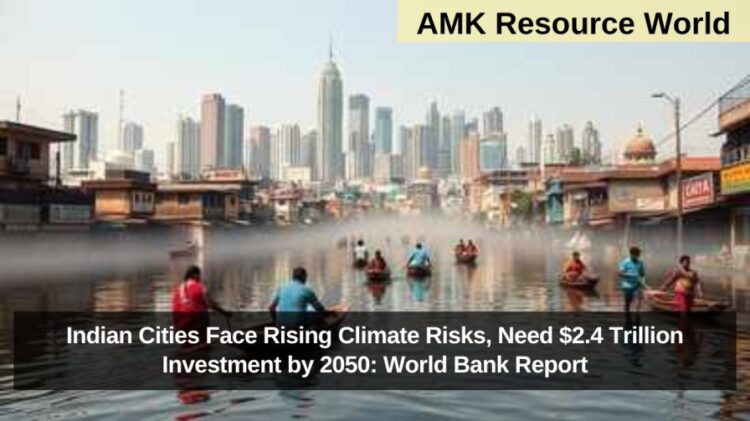
Indian cities are increasingly vulnerable to climate-related risks such as floods, heatwaves, and extreme weather events, and must urgently invest in resilient and low-carbon infrastructure, according to a new World Bank report prepared in collaboration with the Ministry of Housing and Urban Affairs (MoHUA). The report estimates that India will require over USD 2.4 trillion by 2050 to build climate-resilient urban systems that can withstand the growing environmental pressures.
As climate change accelerates, urban flooding has emerged as one of the most pressing threats. The report notes that annual economic losses from rain-related flooding currently stand at around USD 4 billion. Without adequate adaptation and risk-reduction measures, this figure could increase to USD 5 billion by 2030, and alarmingly surge to between USD 14 to 30 billion by 2070.
Rapid urbanisation is placing further strain on infrastructure and increasing exposure to climate hazards. With more people moving to cities, the World Bank highlights that urban areas will remain central to India’s economic development, contributing a significant share to GDP and generating 70% of new jobs by 2030. However, without strategic planning and investment, these economic hubs could face escalating disruptions due to climate shocks.

The report calls for a comprehensive transformation of urban planning and governance frameworks. This includes building green infrastructure, enhancing drainage systems, promoting energy-efficient buildings, and investing in renewable energy, while also strengthening disaster preparedness and early warning systems. Cities must also address heat resilience by expanding green cover, improving water access, and redesigning public spaces to cope with rising temperatures.
Importantly, the report urges policy coherence across local, state, and national levels, advocating for integrated urban development that aligns with India’s climate commitments and Sustainable Development Goals (SDGs). Financing mechanisms such as green bonds, public-private partnerships, and international climate finance will play a critical role in mobilising the required capital.
With climate risks growing in intensity and frequency, the World Bank’s findings serve as a timely reminder that investing in climate-smart urban infrastructure is not just an environmental imperative, but also an economic necessity. Proactive, well-funded, and inclusive urban resilience strategies will be key to safeguarding India’s cities and sustaining long-term growth.