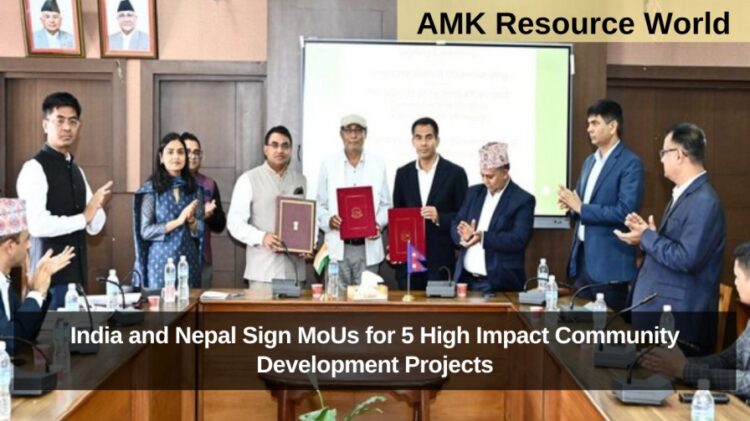
The Embassy of India in Kathmandu, in collaboration with Nepal’s Ministry of Federal Affairs and General Administration, has signed Memorandums of Understanding (MoUs) for the implementation of five High Impact Community Development Projects (HICDPs) under Indian grant assistance, with a total estimated cost of NRs. 390 million. These projects, focused on the education and health sectors, reflect the continuing partnership between India and Nepal to strengthen grassroots development and community welfare.
The five approved projects include the construction of school buildings and a hospital across Dhanusha, Parsa, Achham, Bara, and Manang districts. Each project will be implemented by the respective local authorities, including municipalities and rural municipalities, ensuring that development remains community-centric and tailored to local needs. The objective is to enhance educational infrastructure and healthcare services in underserved and remote areas, directly benefiting thousands of residents by improving access to quality education and essential medical care.
These projects are part of India’s longstanding commitment to Nepal’s socio-economic development. Since 2003, India has supported a total of 579 HICDPs across all 7 provinces of Nepal, of which 496 projects have been successfully completed. These initiatives span multiple sectors, including health, education, sanitation, drinking water, and rural connectivity, demonstrating the wide-ranging scope and inclusive nature of the India-Nepal development partnership.

The HICDP model places special emphasis on empowering local communities, fostering decentralized governance, and ensuring sustainability through the involvement of grassroots institutions. These initiatives not only address critical gaps in infrastructure but also promote people-to-people ties, reinforcing the strong cultural, historical, and economic bonds between the two nations.
The latest round of projects is expected to significantly boost the quality of life in the targeted districts. New school buildings will provide better learning environments for students, while the construction of a hospital will improve healthcare delivery in a region with limited access to medical facilities.
By focusing on high-impact, low-cost infrastructure with long-term benefits, India continues to play a constructive role in Nepal’s development journey. The signing of these MoUs underscores the shared commitment of both countries to promote inclusive growth and strengthen bilateral cooperation through tangible, grassroots-level initiatives.