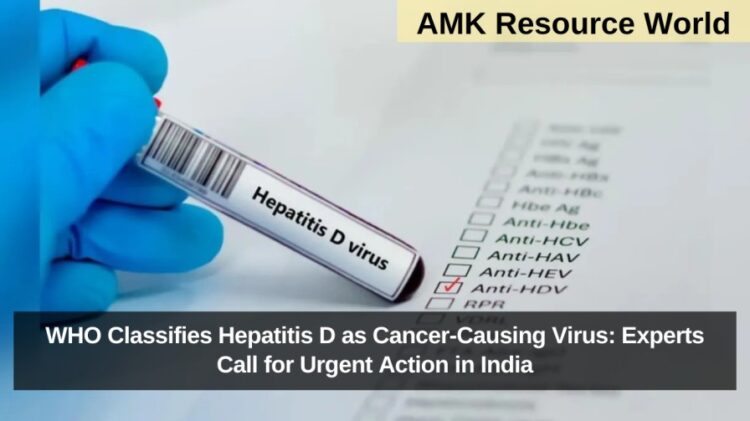
In a significant development for global health, the World Health Organization (WHO) has officially classified Hepatitis D virus (HDV) as a cancer-causing agent, highlighting its strong link to liver cancer when co-infection occurs with Hepatitis B virus (HBV). The move underscores the urgency of strengthening prevention, screening, and public awareness to combat this silent but severe threat.
A Deadly Partnership: HDV and HBV
Unlike many viruses, HDV cannot replicate on its own — it requires the presence of HBV to survive and multiply. This unique dependency makes co-infection particularly dangerous, as the combination accelerates liver damage at a rate far higher than HBV infection alone. WHO’s latest findings reveal that HDV infection can increase the risk of developing liver cancer by up to six times.
HDV also rapidly advances liver cirrhosis — a condition where scar tissue replaces healthy liver cells — significantly reducing life expectancy if untreated. The virus spreads through exposure to infected blood, unprotected sexual contact, and from mother to child during childbirth.
Vaccine: The First and Strongest Line of Defense
Since HDV cannot exist without HBV, preventing Hepatitis B infection through vaccination remains the most effective strategy to stop HDV in its tracks. WHO and leading hepatology experts stress that the Hepatitis B vaccine provides a dual layer of protection — against both HBV and the devastating consequences of HDV co-infection.
However, in India, vaccine coverage for Hepatitis B remains suboptimal, hovering at around 50% according to health ministry data. This gap leaves millions vulnerable to both HBV and HDV, particularly in rural areas where healthcare access is limited.

The Indian Challenge
Experts warn that without urgent action, HDV could quietly exacerbate India’s already heavy liver disease burden. Dr. Ramesh Gupta, a hepatology specialist, notes, “We’re not just talking about another virus — we’re talking about a catalyst that accelerates cancer risk dramatically. With low vaccination rates and limited screening, we are sitting on a time bomb.”
Currently, HDV testing is not routinely included in standard liver disease diagnostics in many parts of the country. This results in missed or delayed diagnoses, allowing the infection to progress unnoticed.
A Call for Comprehensive Action
Public health advocates are urging a multi-pronged approach:
- Increase HBV vaccination coverage through nationwide drives, especially targeting newborns and high-risk groups.
- Integrate HDV screening into existing hepatitis programs to detect co-infections early.
- Raise public awareness about transmission risks and the importance of timely vaccination.
- Expand treatment access for patients already living with HBV and HDV co-infections.
The WHO’s classification of HDV as a cancer-causing virus is more than a medical update — it’s a wake-up call. By focusing on prevention through vaccination, improving screening systems, and educating the public, India and other nations can curb the spread of HDV and protect vulnerable populations from its devastating effects.