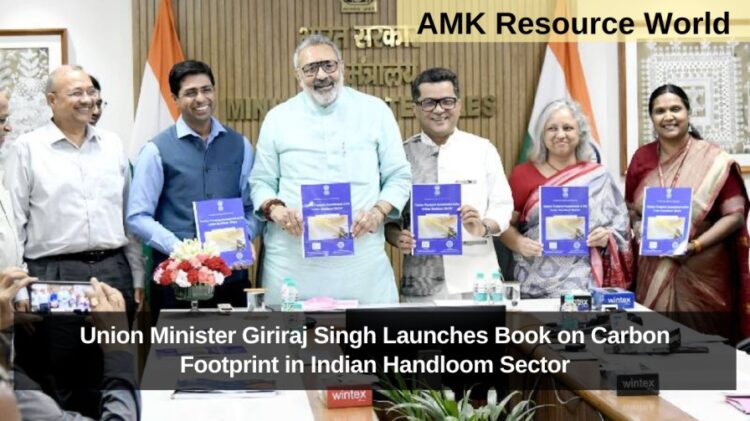
In a significant step towards sustainable development, the Union Minister of Textiles, Giriraj Singh, officially launched a pioneering book titled “Carbon Footprint Assessment in the Indian Handloom Sector.” The publication is a joint effort by the Development Commissioner for Handlooms and the Department of Textiles & Fibre Engineering at the Indian Institute of Technology (IIT) Delhi.
The book presents a comprehensive and scientific methodology to measure, evaluate, and ultimately reduce the carbon footprint associated with handloom production in India. This timely initiative aims to encourage eco-conscious practices within one of the country’s most culturally significant and labor-intensive sectors, contributing to India’s broader climate goals and commitment to sustainable development.
Addressing Environmental Concerns in Traditional Craft
Speaking at the launch event, Minister Giriraj Singh highlighted the need to integrate sustainability into traditional industries. He emphasized that the handloom sector, while being a vital pillar of India’s rural economy and cultural identity, must also adapt to modern environmental challenges. “It is important that our artisans are not only the keepers of our heritage but also the champions of sustainability,” he remarked.
The handloom industry, which provides employment to over 35 lakh people across the country, is known for its low energy consumption compared to mechanized textile production. However, even traditional practices can contribute to carbon emissions through factors such as dyeing methods, transportation, water use, and raw material sourcing. The book meticulously breaks down each of these components and proposes environmentally sound alternatives and mitigation strategies.
Scientific Approach for Grassroots Implementation

The publication incorporates data-driven insights, carbon accounting tools, and lifecycle analysis methodologies suited to the handloom ecosystem. It enables weavers, cooperatives, NGOs, and policymakers to assess their carbon impact and transition toward greener production methods. Specific focus has been given to areas like yarn preparation, natural dye usage, sustainable water management, and use of solar energy.
Officials from IIT Delhi noted that the goal is to make the methodology accessible and scalable, especially in remote weaving clusters where environmental education is often limited. The research-backed strategies aim to bring about measurable improvements in carbon intensity, reduce ecological degradation, and align Indian handlooms with global environmental standards.
A Roadmap for a Greener Future
The Ministry of Textiles affirmed that the launch of this book is just the beginning of a wider green initiative in the sector. Plans are underway to pilot the carbon footprint assessment model in selected clusters across states like Assam, Tamil Nadu, and Uttar Pradesh. Training sessions and awareness drives will also be rolled out to equip handloom artisans with the knowledge to adopt sustainable practices.
In conclusion, the launch of “Carbon Footprint Assessment in the Indian Handloom Sector” marks a transformative moment for India’s traditional weaving industry. By merging heritage with environmental stewardship, the initiative reaffirms the government’s resolve to achieve a greener, more sustainable textile economy — one that not only preserves India’s cultural roots but also protects its ecological future.