The National Council of Educational Research and Training (NCERT) celebrated its 65th foundation day with the launch of several transformative initiatives to strengthen digital education, inclusive learning, and multilingual education in line with the National Education Policy (NEP) 2020. The event, held in New Delhi, was graced by Union Education Minister Dharmendra Pradhan as the chief guest, along with Sanjay Kumar, Secretary (DoSE&L), Ministry of Education, former ISRO Chairman Sreedhara Panicker Somanath, and Chamu Krishna Shastry, Chairman of Bharatiya Bhasha Samiti.
Launch of Bal Vatika TV Channel for Early Childhood Learning
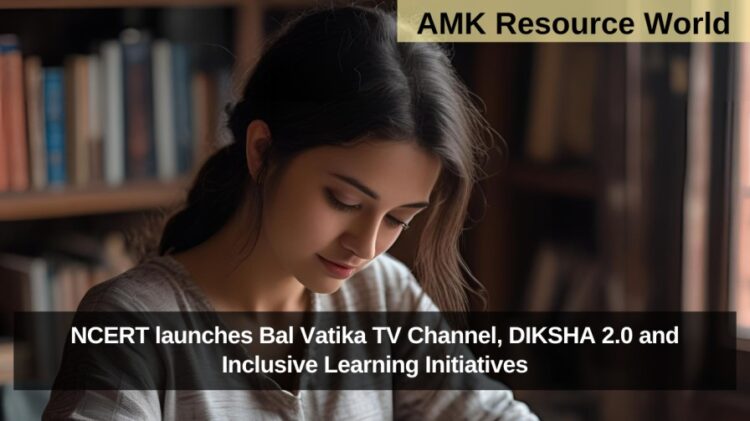
One of the key announcements was the launch of Bal Vatika – PM eVidya DTH Channel No. 35, designed to enhance foundational literacy and numeracy among children aged 3–6 years. The channel provides engaging audio-visual content tailored for teachers, Anganwadi workers, and parents, making early learning interactive and accessible across the country.
DIKSHA 2.0: Upgraded Digital Learning Platform
NCERT also unveiled DIKSHA 2.0, an upgraded version of its widely used digital education platform. The new version comes with structured lessons, adaptive assessments, and performance feedback, ensuring personalized learning experiences for students. It integrates AI-powered features such as Read Aloud, Closed Captioning, and multilingual translation in 12 Indian languages, supporting inclusivity and accessibility in classrooms.

Alongside DIKSHA 2.0, the PM eVidya mobile app was launched, serving as a centralised gateway for digital learning resources, enabling students and educators to access high-quality educational content anytime, anywhere.
New Infrastructure and Learning Resources
The event also witnessed the inauguration of NCERT’s new entrance complex on Aurobindo Marg, New Delhi. NCERT further expanded its commitment to multilingual education by releasing primers in Hindi, Sanskrit, Ho-Hindi, and Koya languages. To promote immersive learning, Virtual Reality (VR) labs were set up in four demonstration schools, offering students experiential and interactive learning opportunities.
Focus on Inclusive Education
A major highlight of the 65th foundation day was the launch of PRASHAST 2.0, an upgraded screening tool to identify children with disabilities at an early stage. This tool is integrated with UDISE+, APAAR, and the Swavlamban Card, ensuring systematic support for children with special needs.
NCERT also introduced Kitab Ek Padhe Anek, a universal design of learning initiative that focuses on creating accessible textbooks for learners with diverse needs, ensuring that every child can access quality education without barriers.
Celebration of Regional Heritage
In addition to technological innovations, NCERT published Utkal Jananinkara Sujogya Santana, a book that celebrates 100 eminent personalities from Odisha who contributed significantly to the state’s development and India’s freedom movement.
Marking its 65th foundation day, NCERT showcased its commitment to driving the vision of NEP 2020 by launching Bal Vatika TV Channel, DIKSHA 2.0, PRASHAST 2.0, accessible textbooks, and VR labs. These initiatives underline NCERT’s efforts to create a future-ready, inclusive, and digitally empowered education system that reaches learners across all sections of society.