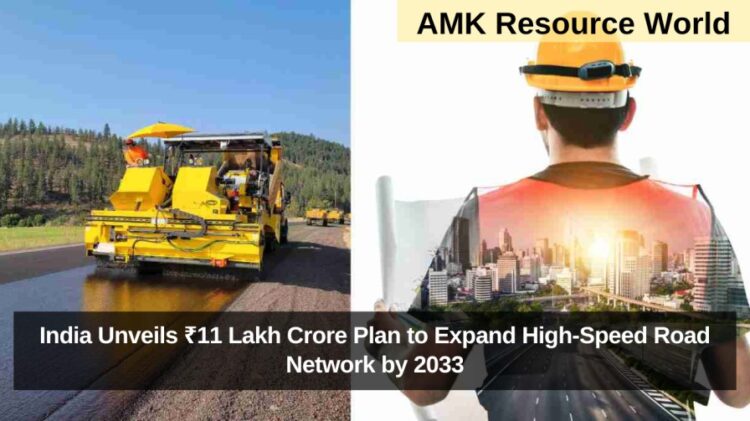
India has announced an ambitious ₹11 lakh crore ($125 billion) infrastructure plan to expand its high-speed road network fivefold by 2033, setting a bold target to modernize transportation, reduce logistics costs, and attract global investment. This initiative, spearheaded by the central government, focuses on building 17,000 km of access-controlled expressways designed to support speeds up to 120 km/h, bringing India’s road infrastructure closer to global benchmarks.
High-Speed Expressway Expansion
The proposed network aims to transform India’s road transport by cutting travel time, improving freight efficiency, and connecting key economic hubs. By 2033, the high-speed corridors will link major cities, industrial clusters, and ports, enabling faster movement of goods and reducing logistics costs, which currently stand at nearly 14% of GDP, much higher than developed economies.
As per official announcements, about 40% of the expressway projects are already under construction, while the remaining will be initiated before 2028. Once complete, this expansion will ensure better connectivity across states, stimulate trade, and generate employment opportunities in construction, logistics, and allied industries.
Financing Through Hybrid Models
To fund this massive road infrastructure expansion, the government has adopted a hybrid financing model, balancing public resources with private capital. Two primary models are being used:

- Build-Operate-Transfer (BOT): Private players construct and operate expressways for a fixed concession period before transferring ownership back to the government.
- Hybrid Annuity Model (HAM): A balanced approach where the government shares both initial funding and traffic risk with private developers, ensuring better investor confidence.
This dual financing structure has already drawn interest from global investment giants like Brookfield, Blackstone, and domestic infrastructure leaders such as the Adani Group, signaling strong private sector participation in India’s infrastructure growth story.
Economic and Strategic Impact
The ₹11 lakh crore expressway plan is expected to revolutionize India’s logistics and supply chain sector, making it more competitive in global trade. Lower logistics costs will directly benefit sectors like manufacturing, e-commerce, agriculture, and exports. Enhanced expressway connectivity will also decongest urban areas, reduce fuel consumption, and cut carbon emissions by minimizing traffic bottlenecks.
From a strategic perspective, these world-class highways will complement other flagship programs like PM Gati Shakti and Bharatmala Pariyojana, aligning with India’s vision of becoming a $5 trillion economy by strengthening infrastructure as a backbone of growth.
Roadmap Ahead
With construction already underway and deadlines set for the next decade, India is poised to witness one of the largest infrastructure transformations in the world. The expressway expansion will not only modernize transport but also redefine connectivity standards, ensuring faster, safer, and more sustainable road travel.
The government’s focus on leveraging both domestic and global investment, coupled with its long-term vision, positions this initiative as a game-changer for India’s economic future.