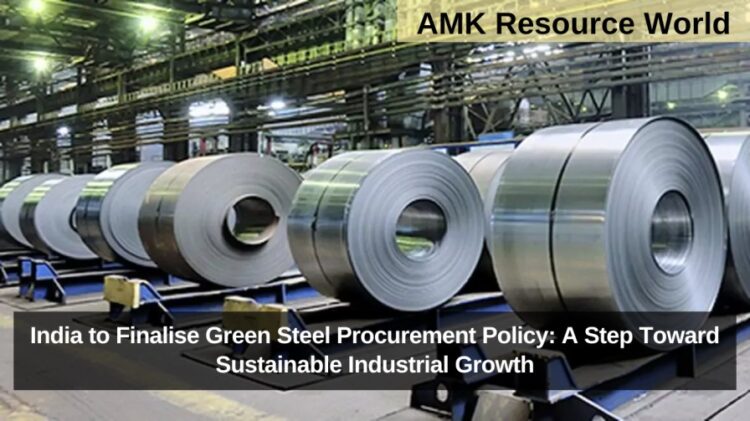
India is in the final stages of drafting a Green Steel Procurement Policy that will mandate at least 25% of all public sector steel purchases to come from low-emission sources. This strategic policy move aims to decarbonize the steel sector, which is responsible for approximately 10–12% of India’s total carbon emissions, and position the country as a global leader in green industrial practices.
Green steel is produced using innovative and low-emission technologies such as hydrogen-based Direct Reduced Iron (DRI), electric arc furnaces (EAF), and power from renewable energy sources. Unlike conventional blast furnaces that rely heavily on coal, these methods significantly reduce greenhouse gas emissions, aligning with India’s broader climate commitments under the Paris Agreement and its net-zero ambitions.
The government has already launched several initiatives to support this transition. The Steel Scrap Recycling Policy promotes the use of recycled materials to reduce dependency on virgin iron ore and coking coal. The Perform, Achieve and Trade (PAT) Scheme encourages industries to improve energy efficiency and trade excess energy-saving credits. Additionally, the National Solar Mission enhances the availability of clean energy, which is crucial for powering green steel processes.

However, the transition to green steel faces several challenges. High capital costs for newer technologies, lack of standardization, and limited availability of green hydrogen and renewable infrastructure present significant hurdles. Moreover, there are few incentives on the demand side, with price-sensitive buyers often opting for cheaper, traditional steel. Creating reliable demand through public procurement is therefore seen as a critical lever to accelerate adoption.
The upcoming Green Steel Procurement Policy is expected to spur domestic innovation, attract investment in clean steel technologies, and create a green market ecosystem. By mandating government bodies to source one-fourth of their steel requirements from low-emission producers, the policy will provide a guaranteed market, encouraging steelmakers to scale up sustainable operations.
If effectively implemented, the policy could place India at the forefront of global green steel production. As one of the world’s top steel producers, India’s leadership in this space could have far-reaching implications, not only for domestic sustainability goals but also for setting international benchmarks in climate-conscious manufacturing.