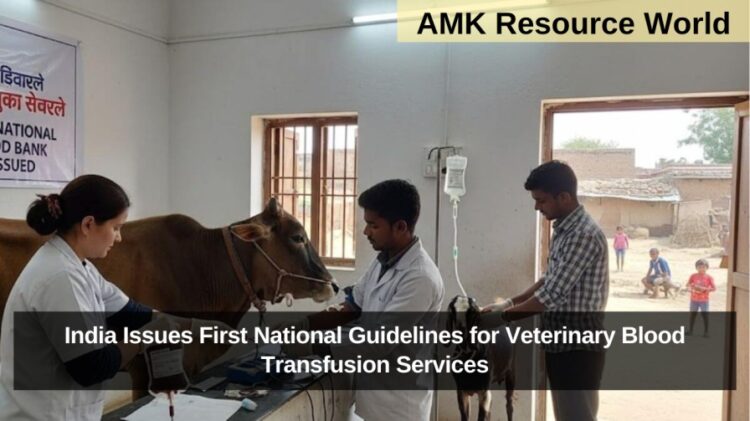
In a landmark step for animal welfare and veterinary medicine, the Government of India has released the country’s first-ever national guidelines for veterinary blood transfusion services. Announced on 25 August 2025 by the Department of Animal Husbandry and Dairying, the initiative fills a crucial gap in standardized emergency care for animals. By creating a structured framework for animal blood donation, storage, and transfusion, the guidelines aim to improve biosafety, ethical practices, and integration with the One Health approach.
Why the Guidelines Were Needed
Until now, veterinary blood transfusions in India were often performed under emergency conditions without formal standards. Key issues included:
- No consistent donor screening or health verification.
- Lack of blood typing or cross-matching procedures.
- Absence of biosafety and hygiene protocols.
These gaps frequently led to adverse transfusion reactions, poor treatment outcomes, and challenges in managing trauma, anemia, surgery-related blood loss, and infectious diseases in animals. The new framework directly addresses these shortcomings.
KEY PROVISIONS OF THE NEW FRAMEWORK
Scientific and Ethical Blood Collection
- Mandatory blood typing and cross-matching to ensure compatibility.
- Donor eligibility criteria based on health checks, vaccination records, and overall fitness.
- Adoption of a voluntary blood donation model, guided by a Donor Rights Charter, ensuring informed consent and ethical practices.
Infrastructure and Regulation
- States will be responsible for establishing biosafety-compliant veterinary blood banks.
- Facilities must follow strict regulatory and hygiene standards for blood collection, storage, and handling.
One Health Integration

The framework supports India’s One Health mission, which connects human, animal, and environmental health. By reducing risks of zoonotic disease transmission, the guidelines strengthen both animal care and public health systems.
Technology and Innovation in Veterinary Services
National Veterinary Blood Bank Network
The guidelines propose a digital platform that includes:
- Donor registries for pets and livestock.
- Real-time blood inventory tracking across states.
- A dedicated emergency helpline for veterinarians.
Future Developments may include:
- Mobile blood collection units to reach rural and underserved areas.
- Preservation techniques for rare blood types.
- Mobile apps to match animal donors with recipients efficiently.
Education and Capacity Building
To ensure sustainability, veterinary education programs will integrate new training modules on transfusion medicine, ethical practices, and biosafety. This capacity-building approach will prepare future veterinarians to adopt global best practices in animal healthcare delivery.
Sectoral Impact and Economic Significance
India has over 537 million livestock and 125 million companion animals, with the sector contributing 5.5% to national GDP and more than 30% to agricultural GDP. By improving emergency veterinary care and disease management, the guidelines are expected to:
- Enhance animal productivity and health.
- Support rural livelihoods and food security.
- Strengthen India’s agrarian economy while promoting global standards in veterinary care.
The release of India’s first national veterinary blood transfusion guidelines represents a turning point in animal healthcare. With its focus on scientific protocols, ethical practices, technological innovation, and One Health integration, the initiative will save lives, modernize veterinary services, and reinforce India’s leadership in animal welfare and sustainable agriculture.