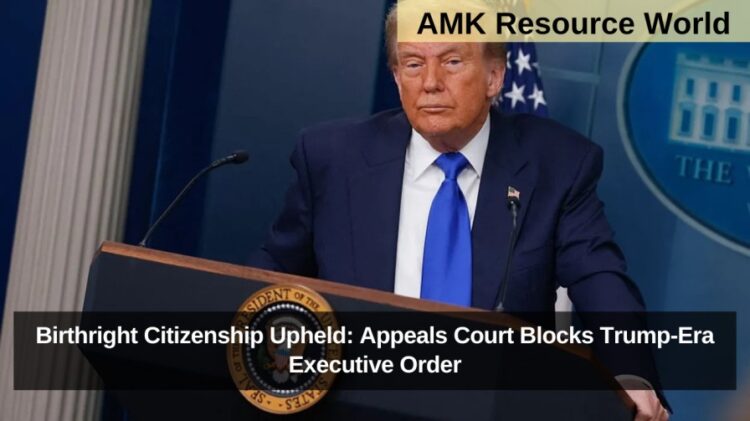
In a landmark decision, a U.S. federal appeals court has ruled that former President Donald Trump’s executive order seeking to end birthright citizenship is unconstitutional. The court upheld the long-standing interpretation of the 14th Amendment, which grants automatic citizenship to nearly all individuals born on U.S. soil, regardless of their parents’ immigration status.
The case stems from Trump’s controversial 2018 executive order that aimed to redefine the scope of the Citizenship Clause of the 14th Amendment. This clause states, “All persons born or naturalized in the United States, and subject to the jurisdiction thereof, are citizens of the United States.” Trump’s order sought to deny U.S. citizenship to children born to undocumented immigrants, arguing that the phrase “subject to the jurisdiction thereof” excluded such individuals.
However, the federal appeals court rejected that interpretation, affirming that the clause has historically been applied broadly since the landmark 1898 U.S. Supreme Court case United States v. Wong Kim Ark, which confirmed that children born in the country to foreign nationals are citizens by birth.

The ruling declared that the executive order exceeded presidential authority and directly contradicted constitutional guarantees. The nationwide injunction, which had previously blocked the enforcement of the executive order, remains in effect. This ensures that all individuals born in the United States continue to be recognized as U.S. citizens under current law.
Legal experts have welcomed the decision as a strong affirmation of constitutional protections and a safeguard against executive overreach. Civil rights groups have long argued that stripping birthright citizenship would not only be unconstitutional but would also create a generation of stateless children, deepening social inequality and discrimination.
The Justice Department has yet to announce whether it will appeal the decision to the U.S. Supreme Court, but further legal challenges are anticipated. Given the high constitutional stakes, the issue may eventually be revisited by the nation’s highest court.
In the meantime, the decision marks a significant victory for immigration advocates and reinforces the United States’ historical commitment to jus soli — the principle of citizenship by birthplace. As political debate over immigration continues, this ruling underscores the enduring power of the Constitution to check executive actions and protect fundamental rights.