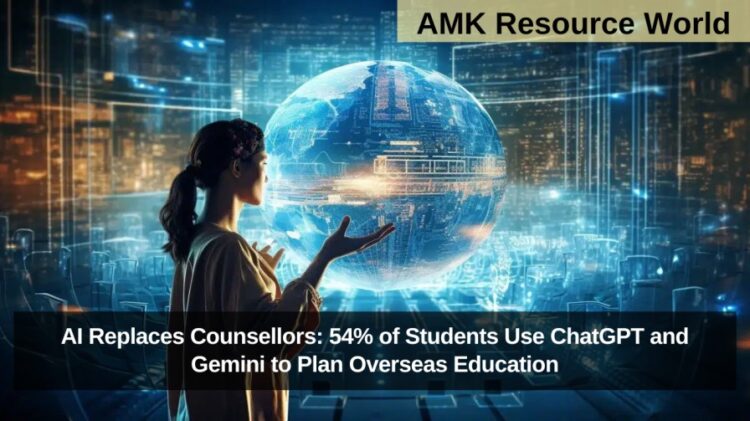
Artificial Intelligence (AI) is fast becoming a trusted companion for students planning their higher studies overseas. According to the Emerging Futures: Voice of the International Student Survey by IDP, 54% of prospective international students now plan to use AI platforms like ChatGPT and Gemini to decide which universities to apply to. Another 53% intend to use them to select their academic programmes — a significant rise from last year’s survey, where only 35% and 38% of students said the same.
This dramatic leap shows how AI in education is reshaping how students gather information, compare options, and make life-changing academic decisions. Conducted in July and August 2025, the survey covered nearly 8,000 current and prospective international students worldwide, highlighting a major digital shift in how the next generation approaches global education.
Students Embrace AI — But Don’t Fully Trust It Yet
Despite AI’s growing presence in decision-making, students remain cautious about relying on it completely. The 2025 Student Communication Preferences Survey by the US-based education consultancy EAB paints a more balanced picture.
While students increasingly use AI chatbots for preliminary research, they still prefer human interaction when making final choices. About 34% of students said in-person experiences such as campus tours and education fairs are their most trusted sources of information. Another 30% rely heavily on official university websites, while 26% continue to depend on teachers, counsellors, and academic coaches for personalised guidance.
This data shows that although AI can simplify early research, real conversations and human insights still carry more emotional and informational weight than machine-generated suggestions.
Only 3% Fully Trust AI Tools

Interestingly, only 3% of students in the EAB study said they fully trust AI-generated advice for study-abroad planning. Many use ChatGPT or Google Gemini merely as starting points — to compare countries, check tuition costs, explore visa options, or shortlist potential programmes.
However, before finalising decisions, students often turn to university counsellors, education agents, or official university representatives to verify the accuracy of what AI tools suggest. This underscores a trust gap that AI platforms must address through more transparency, verified data, and contextual understanding.
The Rise of a Hybrid Approach
Experts believe this trend marks the rise of a “hybrid mindset” among Gen Z students — one that balances technology with human judgment. Today’s students are digitally fluent, curious, and open to experimentation, yet remain mindful of the risks of AI misinformation.
Universities, too, are evolving to meet these expectations. Many have started integrating AI-driven chatbots for initial guidance while maintaining personalised counselling and alumni mentorship programmes to retain authenticity.
As the line between human and machine guidance blurs, one thing is certain: AI is no longer just an experiment in global education — it’s becoming a central part of the student journey itself.