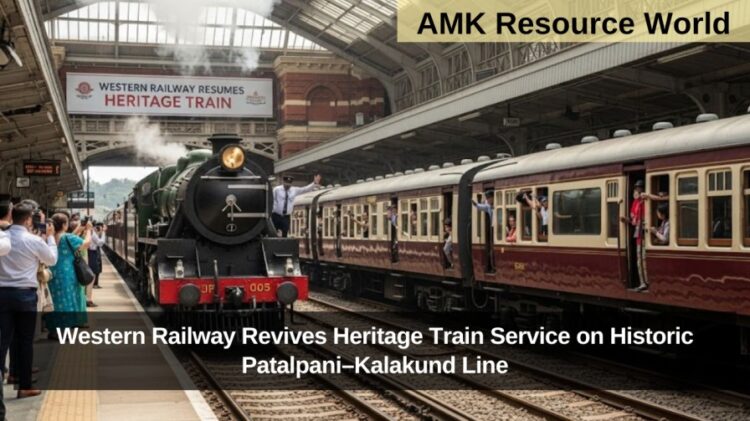
In a significant step toward preserving India’s railway legacy and boosting tourism, the Western Railway has resumed operations of its heritage train service on the 155-year-old Patalpani–Kalakund metre-gauge line in Madhya Pradesh. This scenic 9.5-kilometre stretch, which runs through the picturesque hills between Mhow and Khandwa, has long been regarded as both a historical landmark and a tourism gem.
The heritage line, originally constructed in 1878 during the reign of Maharaja Tukoji Rao Holkar II, was part of the Holkar State Railways—one of the many princely state rail networks that laid the foundation for modern Indian Railways. It was later merged with the Rajputana-Malwa Railway, contributing to the consolidation of rail infrastructure across central India during the colonial era.
After being closed for regular operations, the line was preserved for its heritage value due to its rich history, unique engineering, and cultural significance. The resumption of the heritage train on this line not only reconnects people with the grandeur of vintage rail travel but also highlights India’s commitment to celebrating its railway heritage.

The Patalpani–Kalakund section is renowned for its lush valleys, meandering curves, and ancient tunnels, offering passengers an unforgettable journey through the Malwa region’s scenic landscape. The train, complete with vintage coaches and wooden interiors, offers a glimpse into the bygone era of royal rail travel. Along the route, passengers can enjoy views of waterfalls, thick forests, and hill slopes that once served as lifelines for trade and travel during the 19th century.
The heritage train service is being promoted by the Indian Railways as part of its broader initiative to develop heritage tourism circuits, particularly in regions with historic railway infrastructure. With growing interest in heritage tourism among both domestic and international travellers, the revival of this train is expected to attract railway enthusiasts, history buffs, and nature lovers alike.
According to railway officials, efforts have been made to restore original features of the stations and locomotives, while also ensuring modern safety standards. Local communities, too, have expressed enthusiasm about the initiative, as it is likely to bring economic opportunities in the form of tourism-driven livelihoods.
The Western Railway’s move also aligns with the Indian government’s focus on promoting cultural tourism and rural development. Heritage trains like this not only provide a nostalgic experience but also serve as living museums that educate younger generations about India’s transport history.
In conclusion, the restart of the Patalpani–Kalakund heritage train is more than just the resumption of a rail service—it is a tribute to the engineering marvels of the past, a celebration of India’s royal railway history, and a meaningful push toward sustainable heritage tourism. As the train whistles through the hills once again, it carries with it stories, memories, and the timeless charm of India’s glorious railway era.