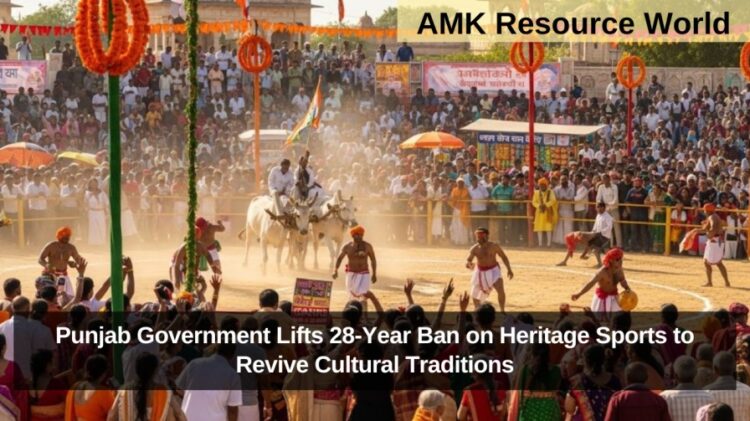
In a landmark decision aimed at celebrating and preserving Punjab’s rich cultural legacy, the Punjab government under Chief Minister Bhagwant Mann has officially lifted the 28-year-old ban on traditional heritage sports, including bullock cart races, dog races, horse races, and pigeon racing. The move marks a significant step towards reviving the spirit of Punjab’s rural traditions, which were banned in 1997.
The decision has been welcomed by cultural enthusiasts and rural communities alike, who view these sports as more than just entertainment — they are a symbol of Punjab’s vibrant history and identity. These events were once common features during fairs and festivals in the region, drawing large crowds and fostering a strong sense of community bonding.
According to officials, while the ban has been revoked, strict regulations and animal welfare guidelines will be enforced to ensure the safety and humane treatment of animals involved in the sports. The state government plans to implement a robust monitoring mechanism involving veterinary supervision and welfare protocols. Any breach of these rules will be met with stringent action, ensuring that revival does not come at the cost of cruelty.

CM Bhagwant Mann emphasized that the lifting of the ban was not just about reinstating rural sports but about restoring pride in Punjab’s roots, particularly among the youth. “Our aim is to reconnect the younger generation with the traditions that define Punjab’s identity. These games represent the spirit, courage, and unity of our people,” he said.
This initiative is expected to not only preserve Punjab’s folk heritage, but also boost rural tourism and local economies, as such events often draw visitors from different parts of the state and even from abroad.
Cultural experts and historians have applauded the decision, noting that while modernization is important, cultural continuity is essential to maintain a strong sense of identity. They have also stressed the importance of balancing heritage revival with ethical practices, a sentiment echoed by the government’s clear stance on animal welfare.
As the state prepares to witness the return of these traditional sports after nearly three decades, there is growing anticipation and excitement across Punjab’s villages and towns — signaling not just a policy change, but a celebration of legacy and community spirit.