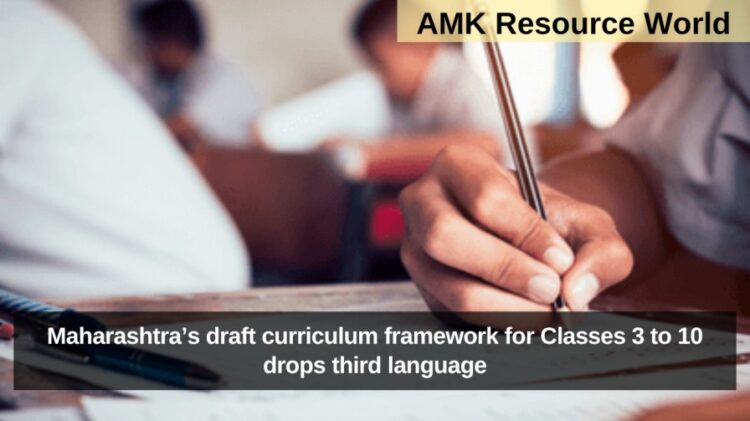
The State Council for Educational Research and Training (SCERT), Maharashtra has released a draft curriculum framework for Classes 3 to 10, which proposes the inclusion of only two languages across all stages of schooling—preparatory (Classes 3–5), middle (Classes 6–8), and secondary (Classes 9–10). This significant change, especially the absence of a third language, has sparked widespread concerns among educators and stakeholders across Maharashtra.
The draft follows the withdrawal of Hindi as a third language in primary classes by the Maharashtra government and aligns with the State Curriculum Framework (SCF) 2024, formulated in line with the National Education Policy (NEP) 2020. According to reports from The Indian Express, SCERT has invited suggestions from stakeholders on the draft, with the last date set as August 27, 2025.
Addressing the omission of the third language, SCERT has issued a clarification note, stating that a committee chaired by Narendra Jadhav has been formed to review the issue. Until the committee submits its recommendations and the state government takes a final decision, the existing language education structure will continue, implying no immediate changes in the current academic session.

Previously, the Maharashtra government had withdrawn its government resolutions (GRs) concerning the mandatory inclusion of Hindi as a third language in Classes 1 to 5. However, the absence of a third language in the new curriculum draft for Classes 3 to 10 has raised doubts about long-term language policy planning in the state.
Commenting on the development, Mahendra Ganpule of the Maharashtra School Principals’ Association noted, “The draft clearly lacks clarity regarding the third language, which has traditionally been a key component of the curriculum in higher classes.”
Madhav Suryawanshi, coordinator of Shikshan Vikas Manch, a forum of teachers and educationists, announced an upcoming statewide online session to address teachers’ doubts and seek clarity from experts.
The draft curriculum also introduces 20 subjects, including new additions like vocational education, and replaces Environmental Studies with “The World Around Us (TWAU)” for Classes 3 to 5.
As consultations continue, the education community awaits a clearer stance on language inclusion and the future implications of this evolving curriculum framework, for more details and download curriculum CLICK HERE