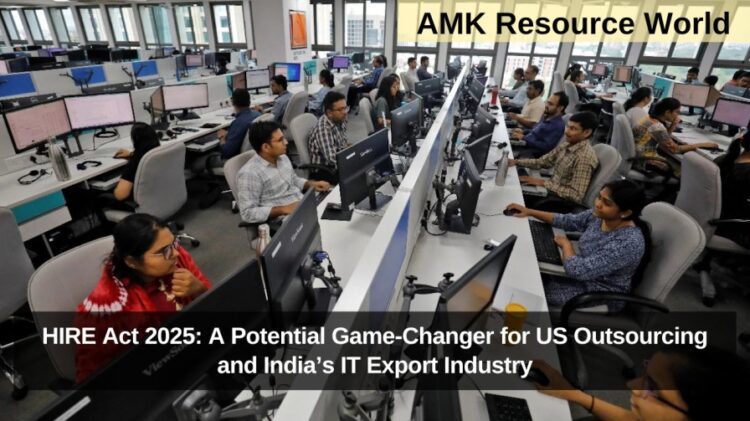
The proposed HIRE Act 2025 in the US Senate has sparked widespread concern across the global outsourcing industry. This legislation seeks to impose a 25% excise tax on outsourcing payments to foreign service providers, aiming to curb offshore work that benefits US consumers but is executed overseas. If enacted, the HIRE Act could severely impact India’s $100 billion IT export industry, which has long been a crucial partner to US businesses.
Key Provisions of the HIRE Act 2025
Under the HIRE Act 2025, US companies making payments to foreign service providers would face a 25% excise tax, significantly increasing the cost of outsourcing. Additionally, the Act would deny tax deductions on such payments, creating a double financial burden on firms that rely on offshore services. The bill also includes strict reporting and anti-avoidance rules, making compliance more complex and costly for businesses engaged in outsourcing.
Impact on India’s IT and Outsourcing Sector
India’s IT export industry, valued at over $100 billion, could be among the hardest hit. The proposed tax threatens to disrupt services such as IT consulting, software development, call centers, Global Capability Centers (GCCs), freelancers, and mid-tier vendors. With tighter margins and increased compliance costs, both US and Indian firms may have to reassess their outsourcing strategies.
Potential Consequences for Businesses
If the HIRE Act 2025 is passed, companies could experience:
- Price Resets: Increased costs may be passed on to US consumers or absorbed by service providers, affecting profitability.
- Compliance Burdens: Firms will face new documentation, reporting requirements, and audits.
- Strategic Shifts Toward Onshore Delivery: Businesses may bring services back to the US to avoid taxes, leading to reduced demand for offshore talent.
- Greater Automation: To offset higher costs, companies could invest more in AI and automation technologies, reducing the need for human outsourcing.
Trade and Diplomatic Tensions

The US-India tech corridor, built over decades of collaboration, could face strain as the HIRE Act 2025 disrupts trade flows. India’s IT and outsourcing firms are vital to the global digital economy, and such measures risk sparking trade tensions between the two nations. Policymakers and industry leaders are likely to engage in intense lobbying and negotiations to address these concerns.
Preparing for the Future
Industry experts advise IT service providers and freelancers to diversify markets, strengthen onshore partnerships, and invest in automation and compliance systems. By proactively adjusting strategies, businesses can mitigate the risks posed by the proposed legislation.
The HIRE Act 2025 represents a major policy shift that could reshape the global outsourcing landscape. By imposing a 25% excise tax on outsourcing payments and denying tax deductions, the Act threatens to upend India’s IT export industry and strain the US-India tech corridor. Stakeholders must stay alert, prepare for policy changes, and innovate to ensure resilience in this evolving environment.