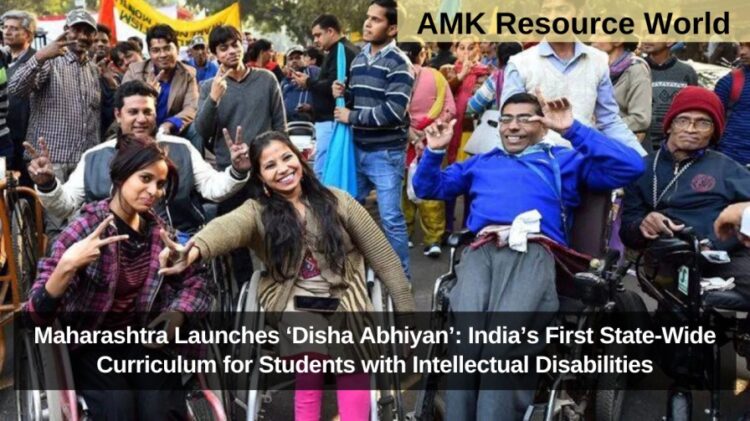
In a groundbreaking step towards inclusive education, Maharashtra has rolled out ‘Disha Abhiyan’, a pioneering initiative to provide uniform and high-quality education for students with intellectual disabilities. Implemented across 453 special schools in the state, this programme marks the first state-wide curriculum of its kind in India, setting a precedent for the rest of the country.
The initiative is closely aligned with the national vision of an inclusive and self-reliant society under the ‘Developed India 2047’ framework, which envisions equal opportunities for all citizens regardless of their abilities.
Implementation Backed by Expertise
‘Disha Abhiyan’ has been conceptualised and developed by the Jai Vakil Foundation, an organisation with over 80 years of experience in special education. The curriculum has undergone rigorous review and has been certified by the National Institute for the Empowerment of Persons with Intellectual Disabilities (NIEPID), ensuring compliance with national quality standards.
The roll-out in hundreds of special schools ensures that children with intellectual disabilities across Maharashtra will have access to the same standard of teaching and learning resources, bridging the gap between urban and rural institutions.
Curriculum Design and Features

At the heart of ‘Disha Abhiyan’ lies a research-driven curriculum that incorporates global best practices tailored for intellectual disabilities. Lessons are designed to cater to different levels of ability, allowing for personalised learning paths.
The modules go beyond academics, covering life skills, social awareness, and vocational training, thus empowering students to lead more independent and self-sufficient lives. Skills such as basic financial literacy, personal hygiene, communication, and workplace readiness are integrated into the programme.
By combining classroom learning with practical skills, ‘Disha Abhiyan’ prepares students not just for exams, but for real-world challenges, enhancing their ability to participate meaningfully in society.
National Significance
Maharashtra’s decision to adopt a uniform special education curriculum at scale represents a major milestone in India’s inclusive education efforts. The initiative resonates with Prime Minister Narendra Modi’s vision of ensuring “no child is left behind” in the journey towards national development.
By prioritising the needs of students with intellectual disabilities, the state is demonstrating how targeted educational reforms can contribute directly to the broader Developed India 2047 goal.
Impact and Future Prospects
The expected outcomes of ‘Disha Abhiyan’ are transformative. A consistent curriculum across special schools will reduce disparities in teaching quality and resources, leading to improved learning outcomes. Students will graduate not only with functional academic knowledge but also with employable skills that enhance their livelihood opportunities.
The initiative also aims to foster greater social inclusion by raising public awareness and encouraging acceptance of differently-abled individuals. In the long term, the model could be replicated in other states, paving the way for a national framework for special education.
With ‘Disha Abhiyan’, Maharashtra has taken a bold step towards equity in education, ensuring that intellectual disabilities are not a barrier to learning, growth, or contribution to society.