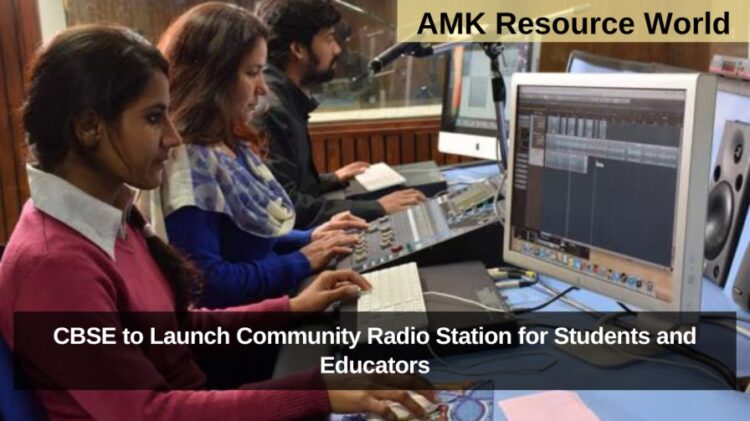
The Central Board of Secondary Education (CBSE) is set to establish its own community radio station exclusively for students, teachers, and other stakeholders, marking a significant step in enhancing educational outreach. According to officials, the proposal received approval during the recent meeting of the CBSE Governing Body, with plans already underway to initiate the licensing process.
A senior CBSE official confirmed that the board will conduct consultative meetings over the next six months with stakeholders and broadcasting experts to prepare and process the application for a community radio license. “The proposal to set up a community radio station was approved by the board’s Governing Body. It was decided that financial implications will be worked out alongside the licensing process,” the official said.
Expanding Beyond Podcasts
CBSE already runs Shiksha Vani, a popular educational podcast delivering timely audio content for grades 9 to 12, aligned with the NCERT curriculum. Available on the Google Play Store for Android devices, Shiksha Vani has uploaded approximately 400 pieces of educational content covering a wide range of subjects in a simple, accessible format.
The proposed community radio station will build on this foundation, offering an even broader and more interactive platform. “The modalities of the content that will be broadcast on the community radio station will be worked out once the license is procured,” the official added.
What is Community Radio?

Community radio is considered the third tier of radio broadcasting, alongside public service broadcasting and commercial radio. Unlike national or commercial stations, community radio operates at low power and is designed to be set up and run by local communities.
These stations focus on hyper-local issues such as health, nutrition, education, agriculture, and social awareness. Content is usually broadcast in local languages and dialects, which helps build stronger connections with listeners. Importantly, community radio serves as a platform for marginalised groups, enabling them to voice concerns and share information relevant to their daily lives.
India’s Community Radio Landscape
Official statistics show that India has 540 commissioned community radio stations, operated primarily by non-profit organisations including educational institutions, NGOs, and community societies. The Indian government actively promotes community radio, particularly in rural and underserved areas, through dedicated schemes and support initiatives.
By launching its own station, CBSE will join this growing network, offering curriculum-based content, exam guidance, teacher training resources, and community-driven discussions that could help bridge educational gaps, especially in areas with limited internet access.
Potential Impact
Education experts believe that CBSE’s community radio could significantly improve access to quality learning resources, particularly for students in remote and rural areas where internet penetration is low. Teachers and school leaders could also use the platform to share best practices, receive updates on policy changes, and engage with the broader educational community.
With the licensing process expected to take several months, and content planning to follow, the station could become operational in the near future, potentially transforming how CBSE communicates with its nationwide network of schools and stakeholders.