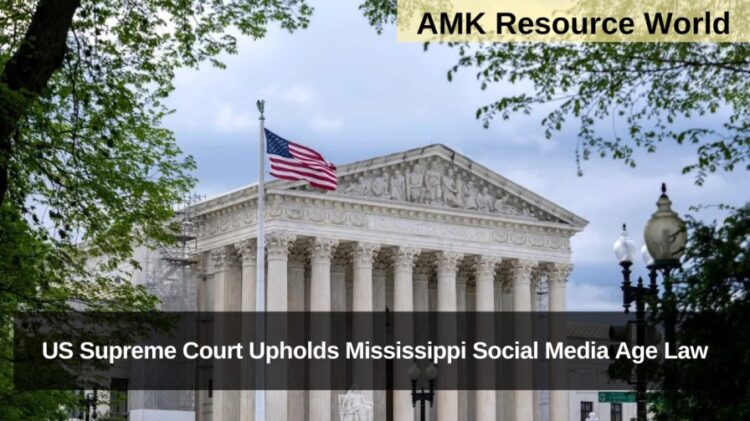
The Supreme Court has recently declined to block a Mississippi law requiring age verification and parental consent for minors’ social media use, marking a significant moment in the ongoing national debate on how to regulate digital platforms to protect children. This ruling highlights the growing tension between child safety, online freedom, and digital privacy in the United States.
Background of the Mississippi Social Media Law
The Mississippi law, now in effect, mandates that social media companies verify users’ ages and obtain parental consent for anyone under 18. Platforms must also make reasonable efforts to restrict minors’ access to harmful online content, particularly content related to sexual abuse, trafficking, and exploitation. Companies that fail to comply could face fines up to $10,000 per violation, signaling strong enforcement measures.
Supporters of the law emphasize its role in addressing concerns about youth mental health, online exploitation, and excessive screen time, while critics argue it raises serious constitutional and privacy issues.
Legal Challenges and Court Battles
The law has faced immediate opposition from NetChoice, a trade group representing major technology companies such as Google, Meta, and Snap Inc.. The tech coalition argues that Mississippi’s requirements infringe on the First Amendment, restricting free speech and threatening user privacy through mandatory identity checks.
Initially, a federal judge blocked the law, citing constitutional concerns. However, the 5th U.S. Circuit Court of Appeals overturned that decision and allowed the law to take effect while litigation continues. The Supreme Court’s refusal to issue a stay means that Mississippi’s law will remain active during the ongoing court battle, setting an important precedent in the fight over social media regulation for minors.

National Context: A Growing Trend
Mississippi is not alone in pursuing tighter regulations on minors’ use of social media. States such as California, Georgia, and Florida have passed similar laws, all facing legal scrutiny and challenges from Big Tech. Recently, the Supreme Court also upheld a Texas law restricting minors’ access to online pornographic content, further underscoring a nationwide push for digital child safety laws.
This broader trend reflects the increasing pressure on lawmakers to balance the rights of free expression and digital access with child protection and online accountability.
Implications for Social Media Platforms and Society
The enforcement of Mississippi’s law could significantly alter how minors interact with social media platforms. By requiring age verification systems and parental oversight, platforms may limit exposure to harmful content and potentially reduce risks tied to youth depression, anxiety, and exploitation.
However, critics caution that such measures may lead to over-censorship, surveillance concerns, and barriers to legitimate access to information. Tech companies warn that mandatory verification could undermine user privacy and security, while advocates argue that the stakes—protecting children from online harm—justify the restrictions.
The Supreme Court’s decision to let Mississippi’s social media law stand marks a pivotal point in the evolving relationship between technology, law, and child protection. As more states introduce similar measures, the outcomes of these legal battles will shape the future of digital policy, online freedom, and platform responsibility in America.