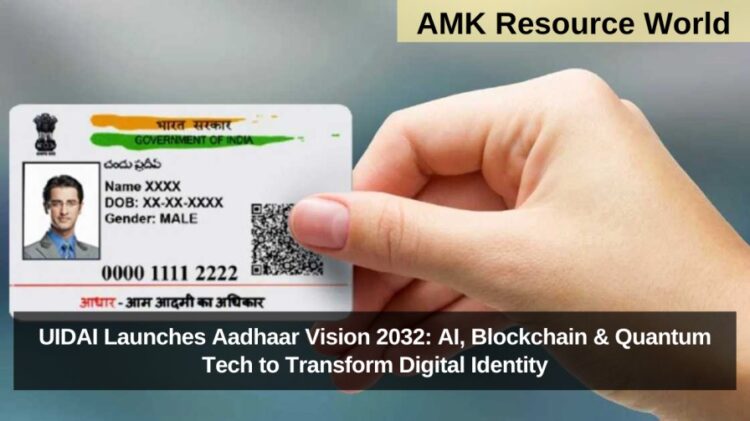
The Unique Identification Authority of India (UIDAI) has officially launched the Aadhaar Vision 2032, a forward-looking strategic roadmap designed to transform India’s Aadhaar ecosystem into a secure, intelligent, and globally benchmarked digital identity framework. This visionary initiative integrates Artificial Intelligence (AI), Blockchain, Quantum Computing, and Advanced Encryption technologies to ensure Aadhaar remains resilient, transparent, and adaptable in a fast-evolving digital landscape. Chaired by Neelkanth Mishra, with a High-Level Expert Committee comprising technologists, academics, legal professionals, and cybersecurity specialists, Aadhaar Vision 2032 aims to reinforce trust, privacy, and efficiency across all Aadhaar-enabled services.
OBJECTIVES OF AADHAAR VISION 2032
Strengthen Security & Privacy: Aadhaar Vision 2032 will introduce next-generation encryption and anonymization protocols using quantum-safe algorithms to protect biometric and demographic data.
Integrate AI for Smart Identity Management: AI-driven analytics will be used to detect fraudulent patterns, improve authentication accuracy, and automate identity verification while maintaining compliance with DPDP Act guidelines.
Adopt Blockchain for Data Integrity: Blockchain technology will ensure immutable, tamper-proof data logs for Aadhaar transactions, enhancing auditability and transparency.
Enable Global Interoperability: UIDAI aims to align Aadhaar’s technical standards with global digital identity frameworks to position India as a leader in secure identity solutions.
Enhance User Empowerment: Aadhaar Vision 2032 emphasizes giving individuals greater control over their data, allowing users to manage, revoke, or restrict consent-based data sharing.
Alignment with the Digital Personal Data Protection (DPDP) Act
The Aadhaar Vision 2032 is deeply aligned with India’s Digital Personal Data Protection Act (2023), which mandates privacy-by-design principles. UIDAI plans to ensure all identity systems are built around data minimization, explicit consent, purpose limitation, and accountability. The initiative seeks to create a trustworthy digital identity ecosystem where data ownership lies firmly with citizens.
Technological Innovations in Aadhaar Vision 2032
- AI-Powered Fraud Detection Systems: Advanced machine learning algorithms will identify anomalies in real time, reducing identity theft and fake Aadhaar generation.
- Quantum-Resistant Encryption: To counter future cyber threats, UIDAI will deploy quantum-secure encryption layers, ensuring data resilience against quantum computing attacks.
- Blockchain-based Authentication Logs: Every Aadhaar transaction will be recorded on a secure blockchain network for auditability and transparency.
- Zero-Knowledge Proof Mechanisms: To enhance privacy, UIDAI will explore ZKP protocols, allowing verification without revealing sensitive personal data.
Governance & Expert Oversight

Under the leadership of Neelkanth Mishra, UIDAI has formed a High-Level Expert Committee comprising:
- Leading AI researchers and data scientists.
- Cyber law and data protection experts.
- Industry specialists from information security, blockchain, and fintech sectors.
- Academicians from IITs and leading policy think tanks.
This multidisciplinary team will guide the phased implementation and policy framework of Aadhaar Vision 2032.
Global Competitiveness & Future Readiness
The initiative aims to make Aadhaar a global model for digital identity innovation, comparable to international systems like EU Digital ID and Singapore’s SingPass. UIDAI’s roadmap will emphasize interoperability, data portability, and ethical AI deployment, ensuring India’s leadership in digital governance.
Frequently Asked Questions (FAQs)
| What is Aadhaar Vision 2032? |
| Aadhaar Vision 2032 is UIDAI’s roadmap to modernize Aadhaar using AI, Blockchain, Quantum Computing, and advanced encryption for enhanced security and efficiency. |
| Who is leading the Aadhaar Vision 2032 initiative? |
| The initiative is led by UIDAI Chairperson Neelkanth Mishra with a High-Level Expert Committee. |
| How does Aadhaar Vision 2032 align with the DPDP Act? |
| It follows the Digital Personal Data Protection Act, ensuring user consent, privacy, and data accountability. |
| What technologies are part of Aadhaar Vision 2032? |
| The project integrates Artificial Intelligence, Blockchain, Quantum Computing, and next-gen encryption technologies. |
| What are the main goals of Aadhaar Vision 2032? |
| To make Aadhaar more secure, intelligent, user-centric, and globally interoperable. |
| How will AI be used in Aadhaar Vision 2032? |
| AI will be used for fraud detection, pattern recognition, and smart authentication. |
| Will Aadhaar Vision 2032 improve user data control? |
| Yes, it will enhance data ownership and consent-based sharing, allowing users to manage personal information securely. |
| When was Aadhaar Vision 2032 launched? |
| It was officially announced by UIDAI in 2025 as part of India’s digital governance roadmap. |
The Aadhaar Vision 2032 marks a transformative chapter in India’s digital governance journey, redefining the country’s digital identity system through AI-driven intelligence, quantum-secure encryption, and blockchain-backed transparency. Under UIDAI’s strategic leadership, this initiative will strengthen citizen trust, enhance data security, and elevate Aadhaar’s position as a globally competitive identity platform. For official updates and technical details, visit uidai.gov.in and bookmark this page to stay informed about future announcements.