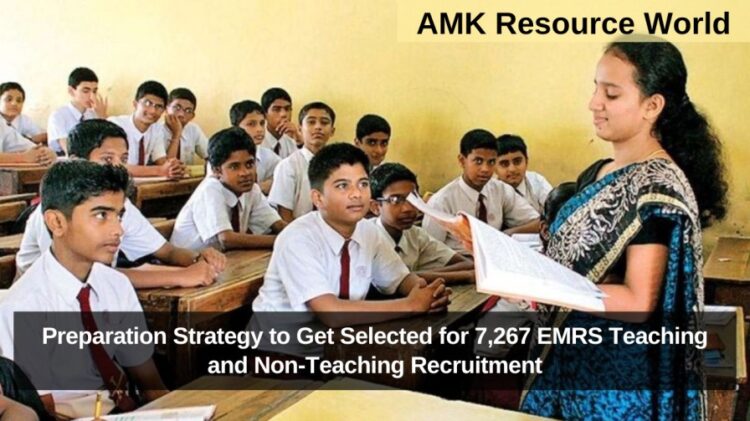
The Eklavya Model Residential Schools (EMRS) recruitment drive 2025, organized by the National Education Society for Tribal Students (NESTS), has opened doors for thousands of aspiring teachers and non-teaching staff across India. With 7,267 vacancies announced for PGTs, TGTs, regional language teachers, PETs, art and music teachers, librarians, and hostel wardens, this is one of the largest recruitment opportunities in the education sector.
However, with such a massive opportunity comes intense competition. Lakhs of candidates are expected to apply, and to stand out, aspirants must adopt a well-structured preparation strategy that covers subject knowledge, exam pattern familiarity, and practical teaching/management skills.
This article provides a comprehensive step-by-step preparation strategy to maximize your chances of success in the EMRS Teaching and Non-Teaching Recruitment 2025.
Understand the Recruitment Structure
Before beginning preparation, it is essential to understand the recruitment process.
- Teaching Posts (PGT, TGT, PET, Art/Music, Librarian):
Selection will be based on a written test conducted by NESTS, followed by document verification. - Non-Teaching Posts (Hostel Warden):
Written test + verification of documents. - Exam Pattern (General Overview):
- Multiple-choice questions (MCQs).
- Sections generally include General Awareness, Reasoning Ability, Quantitative Aptitude, Language Proficiency (English/Hindi), Teaching Aptitude/Pedagogy, and Subject-Specific Knowledge (for PGT/TGT).
A clear understanding of the syllabus and exam pattern is the foundation of effective preparation.
Create a Personalized Study Plan

With limited time before the exam, you need a customized study schedule that balances subject preparation, revision, and practice tests.
- For PGT/TGT: Allocate maximum hours to subject expertise (Mathematics, Physics, Biology, English, Hindi, etc.). Dedicate at least 3–4 hours daily to core subjects.
- For Hostel Warden/Non-teaching roles: Focus on General Awareness, Reasoning, Quantitative Aptitude, and Language Proficiency.
- Divide your day into slots:
- Morning: Subject-specific theory/practice.
- Afternoon: Aptitude, reasoning, and language skills.
- Evening: Mock tests and revision.
Consistency is key—avoid long breaks in study continuity.
SUBJECT-SPECIFIC PREPARATION STRATEGY
For Post Graduate Teachers (PGT):
- Deepen your knowledge of your specialization subject.
- Solve previous years’ PGT exam papers and standard textbooks.
- Revise important concepts like pedagogy, curriculum development, classroom management, and evaluation methods.
For Trained Graduate Teachers (TGT):
- Focus on secondary-level concepts in Mathematics, Science, Social Science, English, and Hindi.
- Use NCERT textbooks (Class 6–10) for conceptual clarity.
- Revise child development and pedagogy topics, including teaching methodologies and assessment strategies.
For Regional Language Teachers:
- Strengthen grammar, comprehension, and literature.
- Prepare practice essays, translations, and comprehension-based questions.
For Music, Art, PET, and Librarians:
- Revise subject fundamentals (theory and practical knowledge).
- For librarians, focus on library management, cataloguing, and information systems.
- PET candidates should be well-versed in physical education, fitness, games rules, and child health.
For Hostel Warden:
- Focus on general aptitude, logical reasoning, and basic administration/management skills.
- Be prepared for questions related to student counseling, hostel management, and discipline.
Focus on Teaching Aptitude and Pedagogy
Since most vacancies are for teaching posts, pedagogy preparation is non-negotiable. Key areas include:
- Child psychology and learning theories (Piaget, Vygotsky, Bloom’s taxonomy).
- Inclusive education and handling children with diverse needs.
- Classroom communication and management.
- National Education Policy (NEP) 2020 highlights.
Candidates should also practice solving pedagogy-based MCQs available in CTET/REET study materials, as the pattern is similar.
Strengthen General Awareness and Current Affairs
The general awareness section can be a game-changer. Focus on:
- Indian polity, constitution, and governance.
- Indian history, geography, and culture (special focus on tribal areas and education).
- Science and technology developments.
- Current affairs: Education policies, government schemes, awards, sports, international relations.
Read newspapers daily and follow reliable current affairs magazines or apps.
Sharpen Reasoning and Quantitative Aptitude
- Reasoning Ability: Practice puzzles, coding-decoding, syllogism, analogy, series, and logical deductions.
- Quantitative Aptitude: Revise percentages, ratios, averages, speed-distance, time-work, profit-loss, and data interpretation.
- Solve previous competitive exam papers (SSC, CTET, KVS, etc.) to improve speed and accuracy.
Improve Language Proficiency
The exam will test English and Hindi language skills.
- Practice comprehension passages, grammar, vocabulary, synonyms-antonyms, error detection, and sentence improvement.
- Write short essays and precis for self-practice.
- For Hindi, revise grammar rules, idioms, and reading comprehension.
Practice with Mock Tests and Previous Papers
- Solve previous years’ EMRS and other teaching recruitment papers (like KVS, NVS, DSSSB).
- Attempt online mock tests under timed conditions to improve speed and accuracy.
- Analyze mistakes and revise weak areas regularly.
Mock tests not only evaluate knowledge but also build exam temperament and confidence.
Time Management and Smart Strategy in the Exam
During the exam:
- Attempt easy questions first to secure quick marks.
- Do not spend excessive time on one question.
- Use elimination techniques for MCQs.
- Keep at least 10–15 minutes for revision at the end.
Smart time allocation ensures maximum attempts with accuracy.
Build Confidence with Soft Skills and Communication
For teaching roles, communication and presentation skills are crucial. Even though selection is written-test based, good communication will help in professional growth.
- Practice speaking confidently.
- Work on clarity of explanation and student-centered approach in teaching methods.
Stay Healthy and Consistent
Long preparation hours require physical and mental fitness.
- Follow a balanced diet and exercise daily.
- Take short breaks during study sessions.
- Maintain a positive mindset—consistency beats cramming.
The EMRS Recruitment 2025 with 7,267 vacancies is a golden opportunity for teaching and non-teaching aspirants across India. With the right blend of subject expertise, teaching aptitude, current affairs awareness, and regular practice, candidates can significantly boost their chances of selection.
By creating a disciplined study plan, solving mock tests, and staying focused, aspirants can confidently face the NESTS EMRS written examination and secure their dream job in one of the most prestigious Eklavya Model Residential Schools.