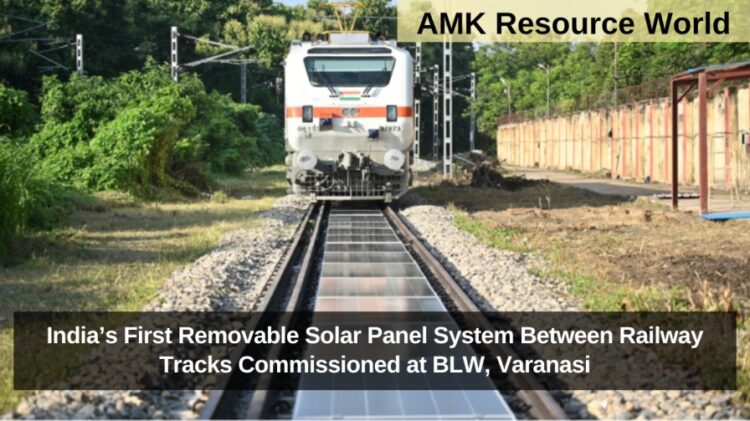
In a groundbreaking step towards green energy innovation, the Ministry of Railways (MoR) has unveiled India’s first removable solar panel system installed between railway tracks. The pilot project was successfully commissioned by Banaras Locomotive Works (BLW), Varanasi, Uttar Pradesh, on Independence Day 2025 at BLW’s Line No. 19, marking a historic stride in the Indian Railways’ mission to achieve net-zero carbon emissions.
A Milestone in Indian Railways’ Green Energy Journey
The solar track panel system has been designed to maximize renewable energy generation while ensuring flexibility and safety. Unlike traditional rooftop or ground-mounted solar systems, this innovative technology is removable and installed directly between railway tracks, showcasing a first-of-its-kind approach in India’s railway infrastructure.
The newly installed system spans 70 metres and comprises 28 solar panels with a total installed capacity of 15 KWp (Kilowatt Peak). This translates into a remarkable 220 KWp per kilometre power density and an energy density of 880 units per kilometre per day, setting new benchmarks for sustainable power generation in the transport sector.
Supporting India’s Net-Zero Carbon Emission Target
The Indian Railways, the world’s largest rail network under a single management, has pledged to achieve net-zero carbon emissions by 2030. Initiatives such as this solar project by BLW Varanasi align with India’s larger climate goals, reducing dependence on fossil fuels and curbing greenhouse gas emissions.
The system is designed to integrate seamlessly with existing electric traction networks and station power supply needs, thereby cutting down operational costs and promoting clean, green energy solutions.
Innovation, Safety, and Flexibility

One of the unique aspects of this project is the removable design of the solar panels. This feature ensures that in case of maintenance, emergencies, or track upgrades, the panels can be easily detached and reinstalled. The design prioritizes operational safety while offering uninterrupted solar energy generation during normal operations.
Additionally, artificial intelligence and IoT-based monitoring systems have been integrated for real-time tracking of energy output, system health, and performance efficiency. This ensures reliability and paves the way for wider implementation across the Indian Railways network.
Future Expansion and Global Interest
With its first-of-its-kind execution in India, the BLW solar track project is drawing attention from both national and international stakeholders. If the pilot proves successful, the Ministry of Railways is expected to roll out similar track-based solar power systems across multiple railway zones.
This could transform the Indian Railways’ renewable energy landscape, offering a scalable, efficient, and sustainable model for green transportation worldwide.
The commissioning of India’s first removable solar panel system between railway tracks at BLW, Varanasi, is not just a technological breakthrough but also a significant leap towards a cleaner and greener railway network. By harnessing solar power innovations, the Indian Railways is setting a global precedent in sustainable transport infrastructure and reaffirming its commitment to a net-zero future.