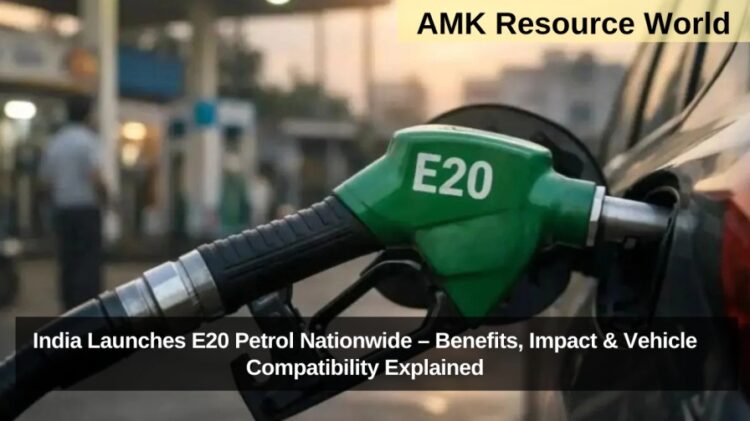
The Ministry of Petroleum and Natural Gas has officially introduced E20 petrol (20% ethanol blend) across India from April 1, 2026, marking a major milestone in the country’s shift toward cleaner and sustainable fuel. The move is highly relevant for students, competitive exam aspirants, and vehicle owners across India and globally, as it directly impacts environmental policies, energy security, and transportation systems.
The nationwide rollout of E20 fuel is part of India’s Ethanol Blending Programme (EBP), transitioning from E10 (10% ethanol blend) to E20, aligning with global trends toward green energy and reduced carbon emissions.
What is E20 Petrol?
E20 petrol is a blend consisting of:
- 80% conventional petrol
- 20% ethanol (biofuel derived from crops like sugarcane, maize, and other biomass sources)
Ethanol is a renewable, plant-based fuel that burns cleaner compared to fossil fuels, making E20 an environmentally friendly alternative.
Key Benefits of E20 Petrol
The introduction of E20 fuel offers multiple advantages for India’s economy and environment:
- Reduced Air Pollution: Lower carbon monoxide and hydrocarbon emissions
- Cleaner Combustion: Ethanol burns more efficiently than petrol
- Energy Security: Reduces dependence on imported crude oil
- Support for Farmers: Increases demand for crops like sugarcane and maize
- Higher Octane Rating: Improves engine performance in compatible vehicles
Impact on Vehicles
While the government has ensured a smooth transition, vehicle compatibility is an important consideration:
Compatible Vehicles
- Most modern vehicles (manufactured after 2023) are designed to run on E20 fuel
- Automobile manufacturers are gradually shifting to E20-compliant engines
Older Vehicles
- May experience slight reduction in fuel efficiency
- Minor performance variations possible
- Long-term use may require engine adjustments or upgrades
Environmental and Economic Significance
The E20 rollout is a strategic step toward:
- Achieving lower greenhouse gas emissions
- Promoting sustainable mobility
- Strengthening India’s energy independence
- Supporting climate change commitments under global agreements
This initiative also reduces India’s oil import bill, saving valuable foreign exchange and boosting the domestic biofuel industry.
India’s Ethanol Blending Journey
India has progressively increased ethanol blending over the years:
| Stage | Ethanol Blend Level |
| Initial Phase | E5 (5% Ethanol) |
| Intermediate Phase | E10 (10% Ethanol) |
| Current Phase | E20 (20% Ethanol) |
The transition reflects India’s commitment to clean energy adoption and sustainable development goals (SDGs).
Quick Reference Summary

| Aspect | Details |
| Fuel Type | E20 Petrol (20% Ethanol Blend) |
| Launched By | Ministry of Petroleum & Natural Gas |
| Launch Date | April 1, 2026 |
| Composition | 80% Petrol + 20% Ethanol |
| Key Benefit | Reduced emissions & improved energy security |
| Compatibility | Best suited for modern vehicles |
| Official Initiative | Ethanol Blending Programme (EBP) |
Challenges and Considerations
Despite its advantages, E20 adoption comes with certain challenges:
- Infrastructure readiness for nationwide supply
- Awareness among vehicle owners
- Need for vehicle upgrades in older models
- Ensuring sustainable sourcing of ethanol without affecting food supply
Frequently Asked Questions (FAQs)
| What is E20 petrol? |
| E20 petrol is a fuel blend containing 20% ethanol and 80% petrol. |
| When was E20 petrol introduced nationwide in India? |
| It was introduced from April 1, 2026. |
| Is E20 petrol safe for all vehicles? |
| It is safe for most modern vehicles, but older vehicles may experience minor issues. |
| What are the benefits of E20 fuel? |
| It reduces pollution, improves energy security, and supports renewable energy. |
| Does E20 affect mileage? |
| There may be a slight reduction in mileage, especially in older vehicles. |
| What is ethanol made from? |
| Ethanol is produced from crops like sugarcane, maize, and biomass. |
| Why is India promoting ethanol blending? |
| To reduce crude oil imports and promote cleaner fuel alternatives. |
| What was the previous fuel blend before E20? |
| India previously used E10 (10% ethanol blend). |
The nationwide introduction of E20 petrol marks a transformative step in India’s journey toward clean energy and sustainable transportation. By reducing emissions, lowering dependence on fossil fuels, and supporting the agricultural sector, E20 fuel represents a balanced approach to environmental and economic growth. Citizens and aspirants should stay informed about such developments by visiting official portals like the Ministry of Petroleum and Natural Gas and related government websites. Bookmark this page for more updates on India’s energy initiatives and policy changes.