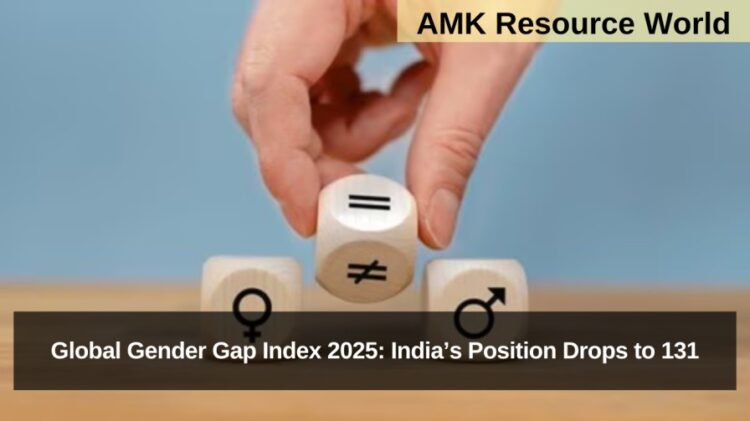
India has been ranked 131st out of 148 countries in the Global Gender Gap Index 2025, slipping four positions from its 127th rank in 2024, according to the latest report released by the World Economic Forum (WEF). This decline signals ongoing and deep-rooted challenges in achieving gender parity across multiple sectors, including economic participation, educational attainment, health and survival, and political empowerment.
The Global Gender Gap Index measures countries on how well they are closing the gender gap across these four key areas. While India has made notable progress in political empowerment, especially with an increased number of women elected to public offices and growing awareness of women’s political representation, this alone hasn’t been enough to offset the significant gender disparities in other domains.

The economic participation and opportunity sub-index remains a major area of concern for India. The report highlights that women’s labour force participation remains alarmingly low, and wage inequality continues to persist. Moreover, access to leadership roles and executive positions for women remains limited, further contributing to India’s low overall score. The report categorically states that India’s gender gap in economic participation is one of the widest in the world, dragging down its standing on the global scale.
When compared to its neighbouring countries, India fares poorly. Bangladesh ranks 24th, continuing to show a strong commitment to gender inclusivity. Even Bhutan (119th), Nepal (125th), and Sri Lanka (130th) have managed to stay ahead of India in the latest index. This regional comparison serves as a stark reminder of the urgent need for systemic reforms and policy interventions to address these persistent gaps.
Iceland retained its top position on the index for the 15th consecutive year, followed by Finland, Norway, and New Zealand—countries known for their progressive gender policies and inclusive governance frameworks.
India’s slip in the rankings underscores the necessity of adopting comprehensive and sustainable strategies to advance gender equality. Addressing issues such as women’s workforce participation, fair wages, education access, and health equity is crucial to reversing this trend. The 2025 report serves as a call to action for all stakeholders—government, private sector, civil society, and communities—to work together to bridge the gender gap and ensure a more equitable future for all, for more details CLICK HERE