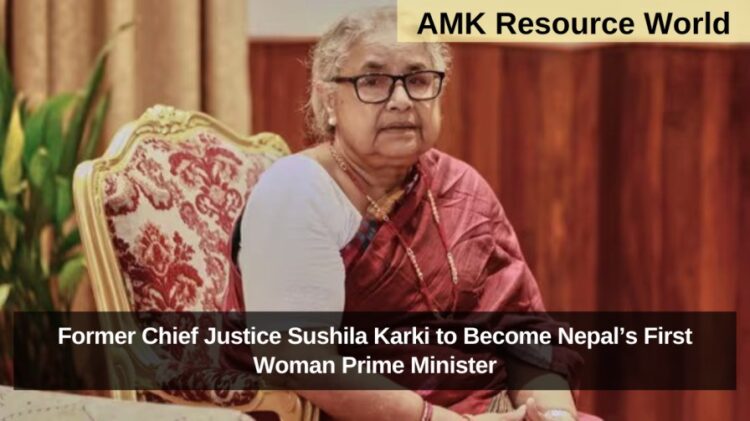
In a historic political development, Former Chief Justice Sushila Karki, aged 73, is set to become Nepal’s first woman Prime Minister. Her appointment comes after a Gen-Z-led protest movement successfully ousted the previous government, reflecting the rising influence of youth activism in Nepal’s political landscape.
Karki, known for her strong anti-corruption stance, will assume office as an interim Prime Minister, tasked with guiding the country towards fresh elections within the next 6 to 12 months. Her leadership represents a transformative moment in Nepalese politics, highlighting a growing public demand for clean governance, transparency, and accountability.
Karki’s Political and Judicial Legacy
Sushila Karki has had a distinguished career in Nepal’s judiciary, culminating in her appointment as the first female Chief Justice of Nepal. During her tenure, she gained national recognition for her uncompromising efforts to combat corruption and uphold the rule of law. Her reputation as a principled and fearless leader made her the preferred choice for the interim Prime Minister role amid political turbulence.
Her appointment signals a historic breakthrough for women in Nepal, demonstrating the increasing role of women in leadership positions across South Asia. Analysts suggest that Karki’s tenure, though temporary, could pave the way for future female leadership in Nepalese politics.
The Gen-Z Movement and Political Change

The selection of Karki follows intense negotiations among the President, military leaders, and protest representatives. The youth-driven movement, spearheaded by Gen-Z activists, emphasized the need for honest governance and a departure from entrenched political corruption. By choosing a figure like Karki, the movement underscored its commitment to meritocracy and transparency over traditional political alliances.
The interim government under Karki’s leadership is expected to stabilize the political environment, ensure free and fair elections, and implement reforms demanded by the protestors. Her administration will also focus on strengthening democratic institutions and restoring public confidence in governance.
Challenges and Expectations
Despite widespread support, Karki faces significant challenges in navigating Nepal’s complex political landscape. The interim government must maintain stability amid competing political interests, manage administrative responsibilities, and address economic and social concerns.
However, her judicial background and anti-corruption credentials provide a strong foundation for addressing these challenges. Experts suggest that Karki’s leadership could inspire similar youth-driven political reforms in South Asia, emphasizing the importance of accountability, gender equality, and ethical governance.
The appointment of Sushila Karki as Nepal’s first woman Prime Minister marks a historic milestone in the country’s democratic journey. With her interim government, Nepal aims to hold fresh elections within 6–12 months, strengthen public trust, and demonstrate the impact of youth activism in shaping national leadership. Karki’s tenure not only symbolizes women’s empowerment in politics but also reflects Nepal’s commitment to transparent and accountable governance.