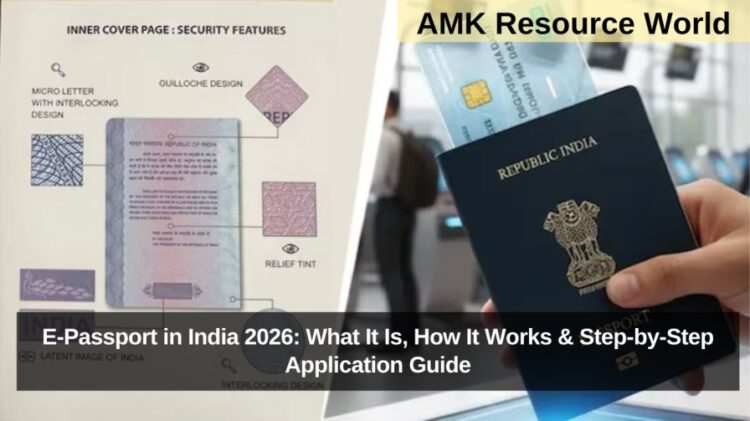
An e-passport in India is a modern, biometric-based travel document designed to make international travel safer, faster and more efficient. While it looks similar to a traditional passport, the e-passport includes a secure embedded microchip that digitally stores your personal and biometric information. As many countries upgrade their border-control systems, e-passports are increasingly becoming the global standard, allowing travellers quicker processing and stronger security at immigration counters worldwide.
For students, professionals and frequent travellers, understanding the features and benefits of the e-passport is essential as India prepares to expand digital passport services globally. International keyword variations such as biometric passport, digital passport, chip-enabled passport and machine-readable passport also help this guide reach users across India, UAE, USA, UK, Canada and Europe.
What Is an E-Passport?
An e-passport (electronic passport or biometric passport) contains a small wireless, encrypted chip embedded in the cover. This chip securely stores:
- Name, date of birth, gender
- Passport number and validity
- Digitally signed photograph
- Machine-readable personal details
- Additional biometrics like fingerprints or iris scans (in line with international standards)
These features help border officials verify identity instantly and reduce risks of fraud, forgery and impersonation. Automated e-gates at airports can scan e-passports within seconds, ensuring faster and more secure movement.
How Is an E-Passport Different from a Normal Passport?
A traditional passport displays all personal details only in printed format.
An e-passport, in addition to the printed pages, includes:
- A digitally encrypted chip containing the same information
- Enhanced biometric security
- Compatibility with automated border-control systems
- Faster scanning and reduced manual errors
While both appear similar, the biometric passport makes travelling more secure and efficient, especially at international airports equipped with digital verification systems.
How to Apply for an E-Passport in India? (Step-by-Step Guide)
Applying for an Indian e-passport follows the same process as a regular passport:
- Collect all required documents – Aadhaar, voter ID, PAN, birth proof, address proof, old passport (if applicable).
- Register on the Passport Seva website and log in.
- Fill out the online application form, ensuring accurate details.
- Pay the applicable passport fee online and book an appointment at your nearest PSK/POPSK.
- Visit the Passport Seva Kendra with original documents for photo capture, biometric recording and document verification.
- Undergo police verification, where officers confirm your address and identity.
- Track your application using the file number on the Passport Seva portal.
- Your e-passport will be printed and delivered to your registered address by courier.
- After receiving it, verify all details and ensure the chip-enabled cover is intact.
Benefits of an E-Passport

- Faster immigration processing with electronic scanning
- Access to automated e-gates at many global airports
- Enhanced security through encrypted digital storage
- Reduced chances of identity theft or document tampering
- Greater fraud resistance, making passports harder to forge
- Smooth, efficient travel experience suited to modern global security systems
These features make e-passports a future-ready upgrade for Indian travellers.
FAQs (Frequently Asked Questions)
| What is an e-passport? |
| An e-passport is a biometric passport containing a secure digital chip with personal and biometric information. |
| Is an e-passport more secure than a normal passport? |
| Yes, it uses encryption and biometric verification, making fraud extremely difficult. |
| Does the e-passport application process differ from a regular passport? |
| No, the process is the same through the Passport Seva Kendra system. |
| Can I use e-gates with an Indian e-passport? |
| Yes, many international airports allow e-passport holders to use automated gates. |
| What biometrics are included? |
| A digital photo, and depending on security standards, fingerprints or iris scans. |
| How do I know if my passport is an e-passport? |
| Look for the small e-passport symbol on the cover indicating a chip inside. |
| Is police verification required? |
| Yes, unless eligible for pre-police verification categories. |
| Is the chip visible or removable? |
| No, the chip is embedded securely in the passport cover and cannot be removed. |
The Indian e-passport marks a major advancement in secure, tech-enabled international travel. With encrypted biometrics, automated verification and faster immigration processing, the digital passport ensures smoother and safer global movement. Applicants should refer to the official Passport Seva website for updates and are encouraged to bookmark this page for quick reference and future guidance