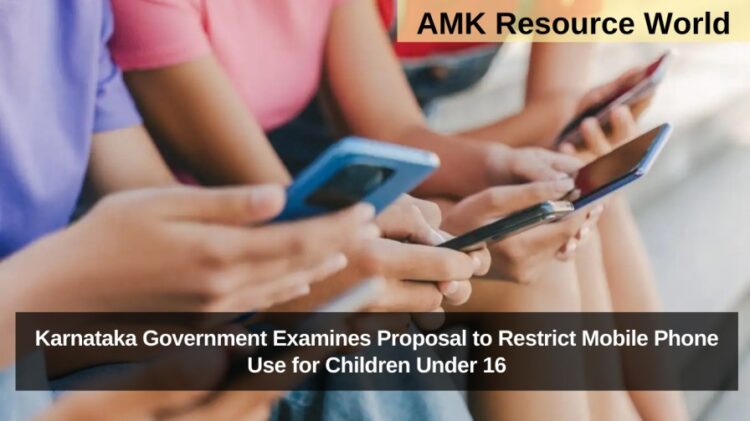
The Karnataka government is reviewing a proposal to restrict or ban mobile phone usage among children below 16 years, citing concerns over digital addiction, exposure to harmful online content, and the influence of artificial intelligence (AI) on young users. The issue has gained prominence following discussions in the State Assembly and consultations with university vice-chancellors, reflecting growing national and global debates on regulating technology access for minors.
The move aligns with increasing awareness across India and other countries regarding the psychological and behavioural impact of excessive social media usage among children and adolescents.
Chief Minister Seeks Academic Input on Mobile Phone Restrictions
Chief Minister Siddaramaiah confirmed that the state government is considering imposing a mobile phone ban for students under 16 years of age. While addressing vice-chancellors of various universities, he sought academic perspectives on limiting student access to personal digital devices.
The Chief Minister highlighted concerns including:
- Rising digital dependency among minors
- Exposure to inappropriate or harmful content
- Influence of social media and AI tools on behavioural patterns
- Broader social and mental health implications
He also noted that several countries have introduced age-based regulatory measures to manage digital exposure among children, suggesting that Karnataka is examining global policy models.
Legislative Debate and International References
During a discussion on the Governor’s address, BJP MLA Suresh Kumar raised concerns about unrestricted access to social media platforms and pornographic content by minors. He cited Australia’s decision to restrict social media access for users under 16 as an example of proactive regulation.
Minister for Electronics, IT and Biotechnology, Priyank Kharge, acknowledged the seriousness of the issue. He referenced regulatory approaches in Australia, Finland, and the United Kingdom, where governments are evaluating age-based restrictions to address digital addiction and online safety concerns.
Kharge further mentioned that the Economic Survey recommended:
- Age-based regulation of online access
- Limiting excessive online teaching hours
- Reducing long-term digital dependency among students
These recommendations reflect broader national discussions on balancing technology use with student well-being.
Digital Detox and AI Regulation Initiatives
In addition to regulatory considerations, the Karnataka government has initiated efforts to promote responsible digital engagement. According to Kharge, the department, in collaboration with Meta, is implementing a digital detox programme covering:
- Over 3 lakh students
- Around 1 lakh teachers
The programme focuses on:
- Encouraging balanced digital habits
- Raising awareness about online risks
- Promoting safe use of artificial intelligence
- Reducing screen-time dependency
This combined approach suggests that Karnataka is exploring both policy-level restrictions and behavioural interventions to address digital overexposure.
Balancing Regulation and Educational Access

The proposal has sparked debate regarding the balance between protecting children from harmful digital content and ensuring access to digital learning tools. Smartphones and internet access have become integral to modern education, especially in blended and online learning environments.
Key considerations include:
- Ensuring digital tools remain available for academic purposes
- Preventing misuse of technology among minors
- Creating structured guidelines instead of blanket bans
- Aligning with national digital education policies
At present, no final decision has been announced. However, the consultations signal a broader policy conversation in India about regulating mobile phone use among minors, reflecting global trends in digital governance.
Quick Reference Summary
| Issue | Details |
| Proposal | Restrict or ban mobile phone use for children under 16 |
| State | Karnataka |
| Concerns | Digital addiction, harmful content, AI influence |
| International References | Australia, Finland, UK |
| Initiatives | Digital detox programme with Meta |
| Coverage | 3 lakh students, 1 lakh teachers |
Frequently Asked Questions (FAQs)
| Is Karnataka banning mobile phones for children under 16? |
| The government is examining the proposal; no final decision has been announced yet. |
| Why is the Karnataka government considering this move? |
| Due to concerns about digital addiction, harmful content exposure, and AI influence on minors. |
| Has any country implemented similar restrictions? |
| Yes, countries like Australia, Finland, and the UK have reviewed or introduced age-based restrictions. |
| What is the digital detox programme mentioned? |
| It is an initiative in collaboration with Meta covering over 3 lakh students and 1 lakh teachers. |
| What role did the Economic Survey play in this discussion? |
| It recommended age-based regulation of online access and reducing excessive online teaching. |
| Is this proposal limited to schools? |
| The discussions include student mobile usage broadly, particularly among those under 16. |
| Who raised the issue in the Assembly? |
| BJP MLA Suresh Kumar raised concerns about social media access for minors. |
| When will a final decision be announced? |
| No official timeline has been provided yet. |
The Karnataka government’s consideration of mobile phone restrictions for children under 16 reflects rising concerns about digital addiction and online safety. While consultations with academic leaders and policymakers continue, the state’s balanced approach—combining regulatory review with digital awareness initiatives—signals a thoughtful response to a complex issue. Stakeholders are advised to monitor official announcements for updates and policy decisions.