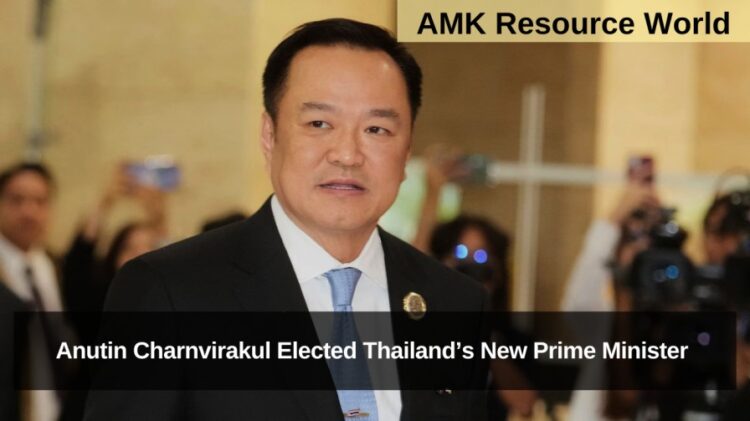
Anutin Charnvirakul has been elected as the new Prime Minister of Thailand, taking office on September 5, 2025, during a period of ongoing political instability in the country. The 58-year-old leader secured a decisive victory in the Thai parliament, becoming Thailand’s third prime minister since 2023, reflecting the turbulent political landscape.
Parliamentary Election Results
Anutin Charnvirakul won the prime ministerial post by securing 273 votes in the lower house, surpassing the 247 votes required to claim victory. His main rival, Chaikasem Nitisiri, representing the Shinawatra family-led bloc, received 132 votes, ensuring a clear mandate for Anutin.
The election highlights the growing influence of coalition politics in Thailand, with Anutin successfully garnering support from key parties to consolidate his leadership.
Support from the People’s Party
A critical factor in Anutin’s success was the backing of the pro-democracy People’s Party, which played a decisive role in ensuring his victory. However, the support came with a key condition: fresh national elections must be held within the coming months. This arrangement aims to balance immediate governance needs with long-term democratic processes, addressing public demands for political stability and accountability.
Political Context and Succession

Anutin Charnvirakul succeeds Paetongtarn Shinawatra, the youngest daughter of former Prime Minister Thaksin Shinawatra, who was removed from office following a ruling by the Constitutional Court. The court found Paetongtarn guilty of ethical violations, triggering her removal and creating a vacuum that led to Anutin’s election.
Thailand’s political environment has been characterized by frequent leadership changes, social unrest, and competing factions since 2023. Anutin’s appointment marks a crucial step toward stabilizing the government, though challenges remain given the ongoing divisions among political blocs.
Profile of Anutin Charnvirakul
Anutin Charnvirakul, aged 58, is a seasoned politician with extensive experience in governance. His leadership style combines pragmatism and coalition-building, enabling him to navigate complex political landscapes. With his election, he inherits the responsibility of steering Thailand through political uncertainty, economic challenges, and social demands for reform.
The new Prime Minister has pledged to work collaboratively with all parties, maintain democratic principles, and honor the commitment to hold fresh elections. His administration is expected to focus on national unity, economic stability, and transparency in governance.
Implications for Thailand
Anutin’s election is a critical moment in Thailand’s political transition, signaling potential stabilization after a period of turmoil. The support from the People’s Party and other coalition members demonstrates a willingness among lawmakers to prioritize governance and continuity over partisan conflicts.
However, the upcoming elections will be a litmus test for Anutin’s administration, as public sentiment and political rivalries will shape the future trajectory of Thailand’s democracy.
With the election of Anutin Charnvirakul as Thailand’s new Prime Minister, the country enters a new phase of governance amid ongoing political crisis. Supported by the People’s Party and a coalition of lawmakers, Anutin faces the dual challenge of ensuring political stability and honoring commitments for fresh elections. His leadership will be closely watched as Thailand navigates the complexities of democratic governance and social reform.