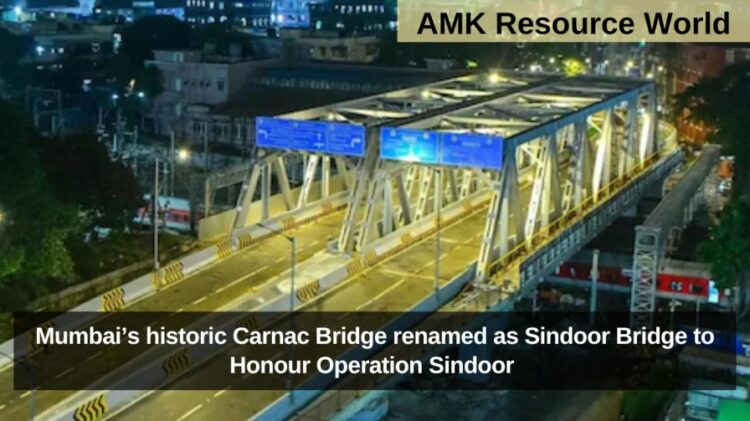
In a landmark moment that blends infrastructure development with national pride, Mumbai’s historic Carnac Bridge, originally built in 1868, has been rebuilt and renamed as Sindoor Bridge. The new name honours Operation Sindoor, a covert military strike conducted by Indian forces on terror camps in Pakistan, symbolizing India’s resilience and strength in defending its sovereignty.
The newly constructed 328-metre-long Sindoor Bridge was inaugurated on July 10, 2025, by Maharashtra Chief Minister Devendra Fadnavis, who hailed it as a vital infrastructure upgrade and a powerful tribute to India’s modern military heroes. “This bridge is not just concrete and steel. It’s a symbol of a New India—one that remembers its brave sons and reclaims its own historical narrative,” said Fadnavis at the inauguration ceremony.
The decision to rename the bridge also stems from a conscious effort to erase remnants of colonial legacy. The original bridge was named after Governor James Carnac, a British colonial administrator associated with harsh policies and atrocities against Indians. The new name, Sindoor Bridge, replaces a colonial relic with a name rooted in contemporary Indian valor, marking a symbolic reclamation of history.

Strategically located in South Mumbai, the new bridge is expected to significantly ease traffic congestion in the bustling area. It connects important commercial zones and facilitates smoother vehicular movement, benefiting thousands of daily commuters. The bridge had been closed for reconstruction due to safety concerns, given its dilapidated state and age.
However, its opening was marred by multiple delays, primarily due to issues surrounding signage installation and railway safety clearance. These delays sparked public protests and criticism, especially from commuters and local residents who were eager to see the vital link restored. The eventual completion and inauguration have been met with relief and appreciation.
The renaming of the bridge has also drawn national attention for its symbolic significance. It represents a broader cultural and political movement to reclaim Indian spaces, names, and narratives, honoring the country’s present-day achievements and sacrifices.
The Sindoor Bridge now stands not only as a modern engineering marvel but also as a monument to patriotism, signifying India’s journey from colonial subjugation to sovereign strength and self-respect.