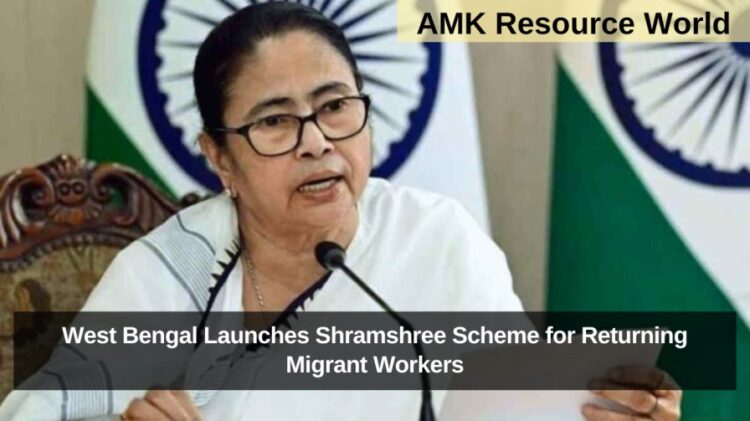
West Bengal Chief Minister Mamata Banerjee launched the Shramshree Scheme, a landmark rehabilitation initiative aimed at supporting Bengali migrant workers returning to the state after facing harassment, discrimination, or exclusion in other states due to speaking Bengali. The scheme underscores the government’s commitment to protecting the dignity and livelihood of its workers, while also addressing the challenges faced by migrants in hostile work environments.
Key Features of the Shramshree Scheme
The Shramshree Scheme is designed to provide comprehensive assistance to displaced migrant workers. Some of its main provisions include:
- Monthly Financial Aid – Eligible returning workers will receive ₹5,000 per month for up to one year, or until they secure stable employment. This financial support acts as a safety net during their transition back to the state.
- Skill Training Programs – The Labour Department of West Bengal will provide industry-relevant skill training, enabling workers to enhance their employability and adapt to the evolving job market.
- Job Cards for Employment – Migrant workers enrolled under the scheme will be issued job cards, ensuring direct access to state-run employment programs and welfare benefits.
- Self-Employment Loans – To encourage entrepreneurship, the scheme offers low-interest self-employment loans, helping workers start small businesses or join cooperative ventures.
Addressing Migrant Worker Challenges

The Shramshree Scheme 2025 directly addresses the plight of thousands of Bengali-speaking migrant workers who often face linguistic discrimination, workplace harassment, and social exclusion in other states. By creating a structured rehabilitation mechanism, the scheme ensures that those returning home are not left vulnerable but are instead provided with opportunities for economic stability and social reintegration.
Alignment with West Bengal’s Welfare Vision
Chief Minister Mamata Banerjee emphasized that the scheme reflects West Bengal’s broader welfare-oriented governance model, focusing on inclusivity and human dignity. The initiative is in line with other state social welfare programs, aimed at uplifting marginalized groups and promoting self-reliance among workers.
The government expects the scheme to not only rehabilitate returning migrants but also boost the state’s labor force by channeling their skills into local industries, MSMEs, and service sectors.
Economic and Social Impact
The potential impact of the Shramshree Scheme is far-reaching:
- Immediate Relief: The monthly aid provides crucial financial support for families struggling after job loss.
- Employment Generation: Skill training and job cards ensure quicker reintegration into the job market.
- Entrepreneurial Growth: Loans for self-employment promote small businesses, thereby strengthening the state’s economy.
- Social Empowerment: By prioritizing dignity and rights of workers, the scheme fosters inclusivity and reduces stigmatization of migrants.
The launch of the Shramshree Scheme on 18 August 2025 marks a progressive step in safeguarding the rights of Bengali migrant workers and ensuring their smooth rehabilitation in West Bengal. With provisions like ₹5,000 monthly financial aid, skill training, job cards, and self-employment loans, the scheme not only addresses immediate challenges but also empowers workers to rebuild their lives with dignity.
By focusing on welfare, rehabilitation, and employment opportunities, West Bengal has set a strong precedent in addressing migrant worker issues, reinforcing its commitment to social justice and inclusive growth.