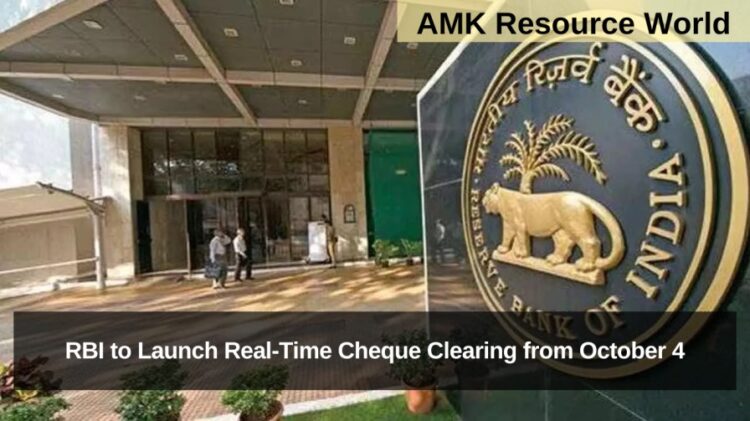
In a major step towards enhancing India’s banking infrastructure, the Reserve Bank of India (RBI) has announced that it will introduce a real-time cheque clearing system starting October 4, 2025. This new system is set to replace the existing Cheque Truncation System (CTS), which currently clears cheques in 1–2 working days, thereby reducing settlement risks and improving customer convenience.
What Will Change with Real-Time Cheque Clearing?
The new cheque clearing mechanism will ensure that cheques are scanned, processed, and settled continuously during business hours, ending the existing batch-clearing process. Under the current CTS framework, cheques usually follow a T+1 settlement cycle, meaning they are cleared the next working day.
With real-time cheque clearance, the processing time will be reduced to just a few hours, allowing customers to access funds faster and making cheque transactions more efficient and reliable.
Integration with Existing Payment Systems
The real-time cheque clearance will operate alongside existing electronic payment systems such as NEFT, RTGS, and IMPS, which already offer instant or near-instant transfers.
- NEFT (National Electronic Funds Transfer): Operates 24/7 with no RBI-set limit, though banks like SBI (₹25 lakh cap) and HDFC have their own restrictions.
- RTGS (Real-Time Gross Settlement): Designed for high-value transactions above ₹2 lakh, offering immediate fund transfers.

- IMPS (Immediate Payment Service): Allows instant fund transfers 24/7, commonly used for retail banking.
By complementing these electronic transfer systems, the real-time cheque clearing facility will benefit individuals and businesses who still rely on cheques for large or formal transactions.
Two-Phase Implementation
RBI has outlined a phased rollout of the system to ensure smooth adoption by banks and customers:
- Phase 1 (October 4, 2025 – January 2, 2026): Banks must confirm cheque clearance requests by 7:00 pm on the same day. If no response is received by then, the cheque will be automatically approved and settled.
- Phase 2 (from January 3, 2026): Banks must confirm cheque clearance within 3 hours of receipt. Failure to respond will again result in automatic approval and settlement.
This phased transition will ensure banks have adequate time to upgrade their systems and processes to handle real-time operations efficiently.
Benefits of Real-Time Cheque Clearing
The RBI’s move towards real-time cheque clearing comes with several significant advantages:
- Faster access to funds for customers, improving liquidity.
- Reduced settlement risk by eliminating delays in processing.
- Greater customer convenience, especially for businesses relying on cheque-based transactions.
- Alignment with global best practices, bringing India’s cheque processing system at par with modern standards.
The launch of real-time cheque clearance by RBI marks a historic transformation in India’s banking system. By replacing the outdated T+1 CTS system with a faster, more reliable mechanism, RBI aims to boost efficiency, reduce risks, and enhance customer satisfaction.
Once implemented nationwide, this change will reshape how individuals and businesses use cheques, ensuring that cheque payments remain relevant and convenient in India’s rapidly digitising financial ecosystem.