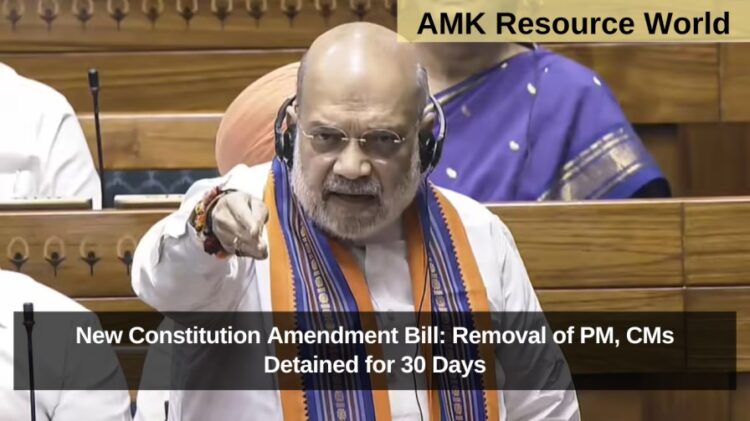
The 130th Constitution Amendment Bill was introduced in the Lok Sabha by Union Home Minister Amit Shah, sparking a nationwide debate on governance, accountability, and constitutional values. The bill seeks to bring sweeping reforms by mandating the automatic removal of the Prime Minister, Chief Ministers, and other ministers if they remain under detention for 30 consecutive days on serious criminal charges.
Key Features of the 130th Constitution Amendment Bill
The proposed amendment makes significant changes to Articles 75, 164, and 239AA of the Constitution of India. These provisions currently govern the offices of the Prime Minister, Chief Ministers, and Ministers at both the Union and State levels. The key highlights include:
- Automatic Cessation from Office: Any Prime Minister, Chief Minister, or minister detained for 30 consecutive days on charges of grave criminal offences will automatically lose office.
- No Conviction Required: Unlike the current framework where conviction is necessary for disqualification, the bill makes detention itself a sufficient ground for removal.
- Reappointment Allowed: The provision also allows such leaders to be reappointed once released from detention, subject to political discretion and public acceptance.
Objective of the Bill

The 130th Constitution Amendment Bill 2025 is aimed at promoting clean governance, transparency, and public trust in the political system. By enforcing stricter accountability mechanisms, the government intends to ensure that those facing serious criminal allegations cannot continue holding powerful executive offices during their detention.
Union Home Minister Amit Shah emphasized that the bill is a landmark step toward strengthening democracy by ensuring that governance remains free from the influence of individuals facing grave charges.
Criticisms and Concerns
Despite its stated objectives, the bill has triggered sharp criticism across political and legal circles. Several constitutional experts and opposition leaders argue that:
- Violation of Presumption of Innocence – The bill undermines the fundamental legal principle that an individual is considered innocent until proven guilty. Detention does not equate to conviction, and automatic removal without trial raises concerns about fairness.
- Potential for Political Misuse – Critics fear that the provision could be weaponized by governments to target political opponents through fabricated charges or prolonged detentions.
- Federalism at Risk – The amendment alters the powers of state governments by directly impacting the tenure of Chief Ministers and state ministers, potentially undermining federal principles.
- Judicial Scrutiny – The bill may face legal challenges in the Supreme Court of India, as it directly impacts constitutional safeguards related to executive offices.
Current Status
The 130th Constitution Amendment Bill has been referred to a Joint Parliamentary Committee (JPC) for detailed examination. The committee will review the provisions, consider public and expert opinions, and recommend whether amendments or safeguards are needed before the bill is passed into law.
The 130th Constitution Amendment Bill represents a bold attempt to address the issue of criminalization of politics in India. While its intent to promote clean governance and public trust is laudable, the potential risks of misuse, constitutional challenges, and federal tensions make it one of the most debated legislative proposals in recent times. The final outcome will depend on the recommendations of the JPC and the broader consensus in Parliament.