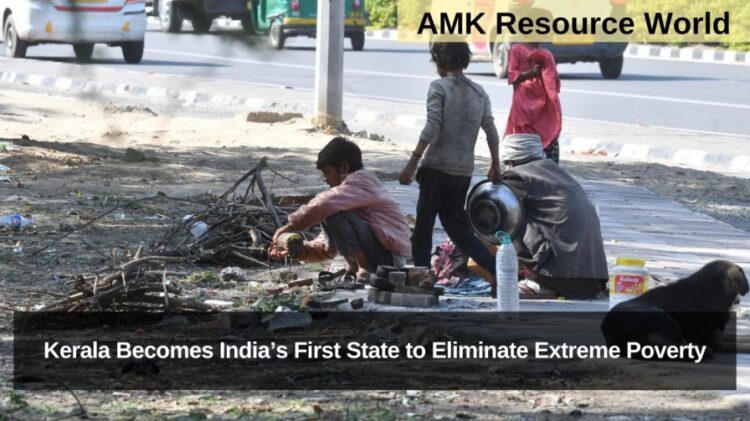
In a historic declaration made during a special Kerala Piravi Assembly session, Chief Minister Pinarayi Vijayan announced that Kerala has officially become the first Indian State to eliminate extreme poverty, marking a transformative milestone in India’s social development journey. The achievement was realised under the Extreme Poverty Alleviation Project (EPEP), a flagship initiative launched in 2021, dedicated to uplifting the most vulnerable sections of society through comprehensive, multi-sectoral interventions.
About the Extreme Poverty Alleviation Project (EPEP)
The EPEP initiative was launched with the goal of ensuring “No One Left Behind”, in line with the United Nations Sustainable Development Goals (SDGs). Through a data-driven approach, local governments and partner organisations identified 1,03,099 individuals from 64,006 families living in extreme poverty across the state. The programme’s core mission was to guarantee access to basic human needs—including food, housing, healthcare, education, and livelihood opportunities—for every individual in this category.
Key Features and Implementation
Kerala’s success under EPEP stems from its coordinated governance model involving multiple stakeholders:
- Local Self-Governments: Played a central role in identifying and supporting extremely poor households.
- Kudumbashree Mission: Implemented targeted livelihood and women empowerment programmes.
- Line Departments: Ensured inter-departmental collaboration for healthcare, education, and welfare delivery.
- Community Participation: Encouraged local-level monitoring and inclusion for sustainability.
The project was implemented with an investment exceeding ₹1,000 crore, combining state funds and contributions from local bodies, welfare schemes, and social organisations.
Major Achievements under EPEP

- Universal Food Security: Ensured every identified family has access to nutritious food through the Public Distribution System (PDS) and local food security programs.
- Housing for All: Provided secure and dignified housing through Life Mission and local housing schemes.
- Healthcare Access: Extended medical coverage and preventive healthcare under Ayushman Bharat and Aardram Mission.
- Education for Children: Enrolled all children from extremely poor families in schools and provided digital learning support.
- Livelihood Empowerment: Created income-generation opportunities through Kudumbashree self-help groups, micro-enterprises, and vocational training.
Significance of Kerala’s Declaration
This milestone makes Kerala the first Indian state to declare itself free from extreme poverty, reinforcing its image as a leader in human development, social welfare, and inclusive governance. The declaration aligns closely with UN SDG Goal 1 – No Poverty, serving as a model for other states and nations seeking to achieve sustainable poverty eradication. Kerala’s success demonstrates that poverty reduction is achievable through political will, local empowerment, and data-driven governance.
Why Kerala’s EPEP Model Stands Out
- Integrated Policy Framework: Combines welfare, empowerment, and economic inclusion.
- Localized Implementation: Empowers local self-governments to act as change agents.
- Focus on Human Dignity: Treats poverty alleviation as a human rights issue, not merely an economic challenge.
- Strong Monitoring: Continuous evaluation ensures transparency and accountability.
- Replicable Model: Serves as a blueprint for other Indian states and developing nations.
The announcement by Chief Minister Pinarayi Vijayan during the Kerala Legislative Assembly reaffirms the official authenticity of the declaration. The EPEP initiative is executed under the Government of Kerala, with documented support from Kudumbashree, Local Self-Government Department (LSGD), and multiple welfare boards. The success story aligns with data-backed studies from NITI Aayog, UNDP, and World Bank, validating Kerala’s strong institutional expertise and commitment to evidence-based policymaking.
Kerala’s declaration of being free from extreme poverty marks a landmark achievement in India’s social progress, setting a global benchmark for inclusive development. With visionary leadership, robust social welfare systems, and coordinated community action, the state has proven that sustainable poverty eradication is possible. As India moves toward achieving the UN SDGs, Kerala’s EPEP model stands as an inspiring example for other states to emulate. For official updates and documentation, visit the Government of Kerala’s official website and bookmark this page for future reference.