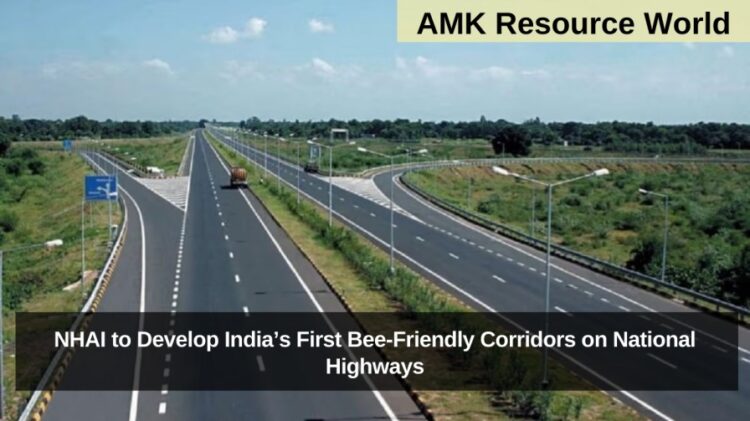
The National Highways Authority of India (NHAI) has announced a groundbreaking initiative to develop India’s first-ever bee-friendly corridors along selected national highways. This eco-conscious step aims to strengthen pollinator conservation, enhance biodiversity, and promote sustainable infrastructure development across India. The initiative integrates environmental sustainability into highway planning, ensuring that ecological balance remains a key priority in national development projects.
Pollinators such as bees, butterflies, and other beneficial insects play a crucial role in maintaining agricultural productivity and ecosystem health. By creating safe and supportive habitats along highway stretches, NHAI aims to contribute meaningfully to biodiversity preservation while advancing infrastructure growth.
What Are Bee-Friendly Corridors?
Bee-friendly corridors are specially designed stretches along highways planted with native flowering plants, shrubs, and trees that provide nectar, pollen, and shelter to pollinators. These green strips are structured to:
- Offer continuous habitat connectivity
- Reduce habitat fragmentation caused by infrastructure
- Support the survival of endangered pollinator species
- Enhance roadside greenery with ecological value
Such corridors have already been implemented in countries like the United Kingdom and the United States, and India’s adoption marks a significant milestone in green infrastructure planning.
NHAI’s Sustainable Infrastructure Approach
The NHAI plans to collaborate with:
- Environmentalists and ecologists
- Research organisations and biodiversity experts
- Botanical and agricultural institutions
These partnerships will ensure scientific planning, native species selection, and long-term maintenance strategies for the corridors. The initiative reflects NHAI’s broader commitment to environmental impact mitigation, aligning with India’s goals under international climate and biodiversity agreements.
Key Objectives of the Initiative

- Promote pollinator conservation
- Enhance ecological balance along highways
- Integrate green design principles into infrastructure projects
- Support agriculture and food security through pollination services
- Raise public awareness about biodiversity conservation
Why Pollinator Conservation Matters
Pollinators contribute to the reproduction of nearly 75% of global food crops, according to international environmental studies. Declining bee populations due to habitat loss, pollution, and climate change have raised global concerns. By introducing bee-friendly corridors, NHAI aims to mitigate some of these risks and support sustainable ecosystems.
Moreover, roadside plantations can reduce soil erosion, air pollution, and noise pollution, offering additional environmental benefits.
Quick Reference Summary
| Feature | Details |
| Initiative By | National Highways Authority of India (NHAI) |
| Project Focus | Bee-friendly corridors for pollinator conservation |
| Purpose | Enhance biodiversity & ecological balance |
| Collaboration | Environmentalists, ecologists, research organisations |
| Benefit | Sustainable & eco-friendly highway infrastructure |
Environmental Impact & Long-Term Vision
This initiative represents a shift from traditional road construction toward eco-integrated highway development. By combining biodiversity protection with infrastructure expansion, India aims to set a model for sustainable development practices.
The bee corridors are expected to:
- Increase green cover along highways
- Encourage community participation in conservation
- Strengthen India’s environmental governance framework
Frequently Asked Questions (FAQs)
| What are bee-friendly corridors? |
| They are highway stretches planted with native flowering plants to support bees and other pollinators. |
| Who is launching this initiative in India? |
| The National Highways Authority of India (NHAI). |
| Why is pollinator conservation important? |
| Pollinators are essential for crop production, biodiversity, and ecological balance. |
| Will NHAI collaborate with experts? |
| Yes, NHAI will work with environmentalists, ecologists, and research organisations. |
| How will this initiative benefit highways? |
| It enhances greenery, reduces environmental impact, and supports sustainable infrastructure. |
| Is this the first project of its kind in India? |
| Yes, it will be India’s first dedicated bee-friendly highway corridor initiative. |
| What plants will be used in the corridors? |
| Native flowering plants that provide nectar and pollen for pollinators. |
| How does this align with sustainability goals? |
| It integrates biodiversity conservation into infrastructure development, promoting eco-conscious growth. |
The NHAI bee-friendly corridor initiative marks a transformative step in India’s infrastructure planning by merging biodiversity conservation with highway development. By supporting pollinators and enhancing ecological balance, the project reflects a forward-thinking approach to sustainable growth. For official updates and further details, visit the NHAI official website and bookmark this page for continued environmental and infrastructure news.