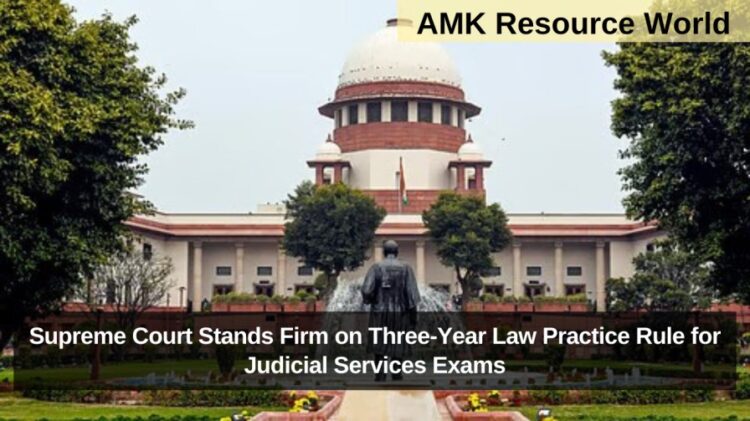
The Supreme Court of India has refused to modify its recent verdict that mandates a minimum of three years of law practice for law graduates to appear in entry-level judicial services examinations. The top court observed that relaxing this requirement could open a “pandora’s box,” potentially creating administrative and legal complications across states.
The matter came up while the bench was hearing a plea filed by a serving judicial officer from Madhya Pradesh, who requested that their experience as a judge be considered for eligibility to take the judicial services examination in other states. The petitioner argued that the professional experience gained while serving as a judicial officer should qualify for exemption from the three-year practice requirement.
On May 20, 2025, a bench headed by Chief Justice B R Gavai delivered a landmark judgment barring fresh law graduates from appearing in the judicial services exam immediately after completing their degree. The verdict stipulated that lawyers must have practiced law for a minimum of three years before they can be eligible for the entry-level judicial services examination. While the court did allow consideration of law internship experience during these three years, it did not extend the same recognition to the experience gained by serving judicial officers.
The bench, comprising Chief Justice B R Gavai and Justice K Vinod Chandran, clarified that including the experience of serving judicial officers for eligibility purposes would lead to inconsistencies and open up “unmanageable legal issues.” According to the court, allowing exceptions for current judicial officers would potentially create a situation where some candidates are advantaged unfairly, undermining the principle of a level playing field in judicial recruitment.

The Supreme Court emphasized that the three-year law practice requirement is intended to ensure that candidates appearing for judicial services exams have adequate legal exposure and hands-on experience in the field. This experience is crucial to prepare prospective judges for the complexities of the judicial system and the responsibilities they will undertake once appointed.
While the court allowed law graduates to count internship experience toward the three-year requirement, it maintained that experience gained as a judicial officer cannot substitute for practicing law. This decision reinforces the principle that judicial services candidates must have substantial legal practice before assuming judicial responsibilities, regardless of prior service as judges in other capacities.
Legal experts have noted that the Supreme Court’s ruling will have significant implications for judicial recruitment across India, especially for candidates planning to move between states. The verdict ensures that only law graduates with practical exposure in legal practice will be considered for judicial entry-level positions, thereby maintaining the professional standards and integrity of the judiciary.
The decision also underscores the court’s cautious approach in maintaining uniformity and fairness in judicial examinations, while discouraging exceptions that could create administrative challenges in the long term.