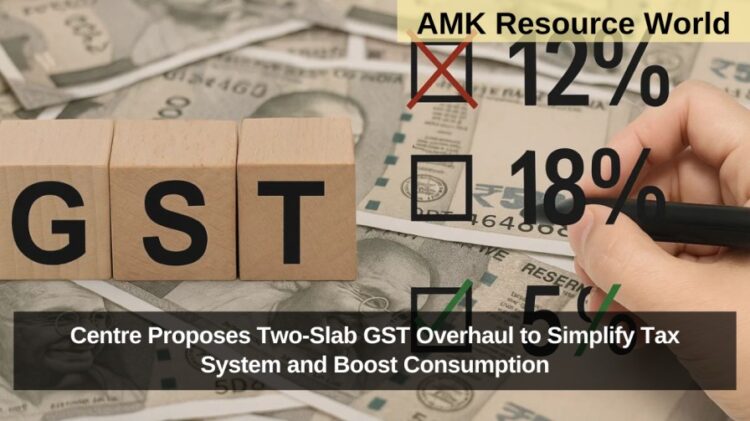
In a major step toward streamlining India’s indirect tax regime, the Centre has proposed an overhaul of the Goods and Services Tax (GST) structure, introducing a simplified two-slab system of 5% and 18%, along with a 40% tax on sin goods such as tobacco and pan masala. The reform, expected to be rolled out by Q3 of FY 2025-26, aims to boost consumption, improve compliance, and address long-standing structural inefficiencies in the GST framework.
Key Features of the Proposal
The most notable change is the merger of multiple intermediate slabs into just two categories. Under the proposed system:
- Common-use goods like food items, clothing, and household essentials currently taxed at 12% will be shifted to the lower 5% slab, providing relief to consumers and potentially boosting demand.
- Aspirational items such as televisions, refrigerators, and other consumer durables, which are presently taxed at 28%, will move to the 18% slab, making them more affordable and stimulating discretionary spending.
- Sin goods including tobacco, pan masala, and luxury products will attract a 40% tax, ensuring that while essential and aspirational goods become cheaper, items with social and health costs remain heavily taxed.
This restructuring reflects the government’s attempt to strike a balance between affordability, revenue generation, and public health concerns.
Addressing Structural Issues
Alongside the slab reduction, the reform package includes several structural fixes that have long been demanded by industry stakeholders. These include:
- Correction of inverted duty structures, which have been a persistent problem in sectors such as textiles and footwear, where input taxes are often higher than output taxes.
- Streamlined classifications to remove ambiguities and reduce litigation around tax rates for various goods and services.

- Faster registration processes to make it easier for businesses, particularly MSMEs, to come under the GST framework without delays.
- Automated refunds aimed at reducing the working capital crunch for exporters and ensuring liquidity within businesses.
These measures are expected to significantly ease compliance burdens and improve the overall efficiency of the GST regime.
Boost to Consumption and Industry Confidence
Economists believe that the proposed changes will not only make the tax system simpler but also revive consumption demand, especially in the middle- and lower-income segments. By reducing the tax burden on everyday goods and aspirational items, households are likely to spend more, giving a much-needed push to sectors like FMCG, consumer durables, and retail.
For businesses, particularly small enterprises, the reduction in tax rates coupled with smoother compliance processes is expected to lower costs, reduce disputes, and enhance confidence in the GST system.
If implemented as planned by the third quarter of FY 2025-26, the two-slab GST system will mark the most significant reform since the tax’s introduction in 2017. While challenges around revenue neutrality and state-level concerns remain, the proposed changes signal a bold move by the Centre to simplify taxation, spur growth, and strengthen India’s consumption-driven economy.