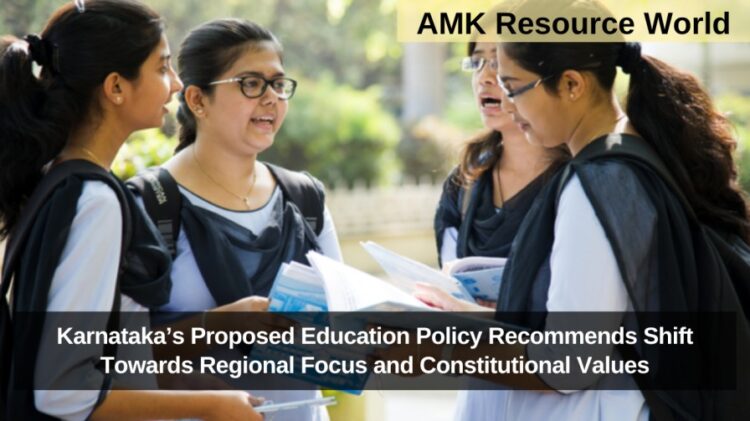
A state-level committee formed to draft a new education policy for Karnataka has submitted its comprehensive report to Chief Minister Siddaramaiah, outlining reforms that could mark a significant departure from the national curriculum framework. The recommendations emphasise regional languages, constitutional values, and a syllabus rooted in the state’s cultural and historical identity.
One of the most notable proposals is the introduction of a two-language formula across all school boards. Under this structure, students up to Class 5 would receive instruction in Kannada or their mother tongue alongside English. The committee further recommends that Kannada become the primary medium of instruction at the middle school level, aiming to strengthen linguistic heritage while maintaining English proficiency for global competitiveness.
Extended Scope of RTE
In a move that could have far-reaching implications, the report suggests extending the Right to Education (RTE) Act to cover students up to 18 years of age. Currently, the RTE Act ensures free and compulsory education for children aged 6 to 14. The proposed extension would bring higher secondary students under its ambit, enabling broader access to free education and reducing dropout rates in senior grades.
Localised Curriculum Over NCERT
Breaking away from the National Council of Educational Research and Training (NCERT) textbooks, the committee advocates for a localised syllabus designed specifically for Karnataka. This curriculum would integrate regional history, culture, and heritage, ensuring that learning materials are contextually relevant to the state.

To implement and monitor these changes, the committee has proposed establishing a special regulatory board for private educational institutions. This body would ensure that schools—both government and private—adhere to the new policy’s guidelines and educational standards.
Constitutional Values and Cultural Preservation
Another key feature of the proposed policy is the inclusion of constitutional values as a compulsory subject. The aim is to instil civic responsibility, democratic ideals, and a sense of national unity among students.
The report also calls for the formation of a state-level committee to promote the Indian knowledge system, integrating traditional wisdom, indigenous sciences, and cultural practices into modern pedagogy. This aligns with the state’s vision to blend contemporary education with India’s rich heritage, making students aware of both local traditions and global perspectives.
Next Steps
The Karnataka government will now review the recommendations in detail before deciding on their implementation. If adopted, the new education policy could reshape the state’s academic framework, giving greater emphasis to local identity while balancing it with modern educational demands.
Education experts believe that these proposals—especially the focus on Kannada-medium instruction, expanded RTE coverage, and culturally rooted content—could address long-standing concerns about inclusivity, accessibility, and relevance in the education system. However, successful implementation will require significant planning, teacher training, and infrastructure adaptation.
Chief Minister Siddaramaiah is expected to hold consultations with stakeholders, including educators, parents, and civil society organisations, before finalising the policy in the coming months.