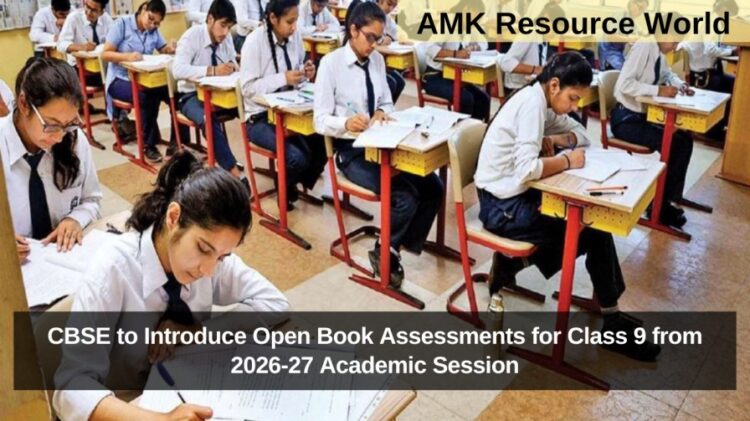
In a landmark move to reform classroom evaluation methods, the Central Board of Secondary Education (CBSE) has approved the introduction of Open Book Assessments (OBAs) for Class 9 students starting from the 2026-27 academic session. The decision aligns with the National Curriculum Framework for School Education (NCFSE 2023), which advocates a shift from rote memorization to competency-based learning.
The governing body of CBSE approved the proposal in its June meeting after reviewing a pilot study conducted earlier this year. Under the new plan, OBAs will form part of the three pen-and-paper assessments conducted each term for core subjects including Language, Mathematics, Science, and Social Science.
Pilot Study Findings
The pilot project tested open-book formats based on cross-cutting themes from the curriculum, without introducing extra reading material beyond what students already study. The study revealed that student scores ranged from 12% to 47%, indicating significant challenges in interpreting resources and applying concepts effectively.
While the performance data highlighted areas for improvement, the pilot also revealed strong teacher support for the initiative. Educators acknowledged that, despite initial hurdles, OBAs have the potential to encourage critical thinking, reduce exam stress, and test deeper understanding rather than mere recall of facts.
CBSE noted in its official statement:

“Despite these hurdles, teachers expressed optimism about OBAs, noting their potential to foster critical thinking. Feedback highlighted the necessity for structured guidance to help students navigate reference materials and apply knowledge contextually.”
How OBAs Will Work
Contrary to the perception that open-book exams are easier, OBAs will focus on evaluating a student’s ability to apply knowledge to real-world situations. Questions will demand conceptual clarity and analytical thinking, rather than memorization.
To maintain fairness and consistency, CBSE plans to develop standardized sample papers that will guide schools in framing high-quality, thought-provoking questions. Teachers will also receive training to help students prepare for this new evaluation format.
Additional Policy Updates
Alongside the OBA approval, CBSE has announced two other significant administrative changes:
Mandatory APAAR ID Linking: Schools must obtain the Automated Permanent Academic Account Registry (APAAR) ID for every student before completing examination registration or submitting the List of Candidates (LOC). This step is aimed at streamlining student records and integrating them into the national academic repository.
Revised Examination Fees: The board exam registration fee for Classes 9 to 12 has been increased by ₹20 per subject. Schools have been advised to inform parents well in advance to avoid delays during the registration process.
A Shift Towards Conceptual Learning
The NCFSE 2023 strongly recommends assessments that mirror real-life problem-solving scenarios rather than memory-based evaluations. By introducing OBAs at the Class 9 level, CBSE hopes to lay the foundation for lifelong learning skills, preparing students to think independently and apply their knowledge in dynamic situations.
The transition period until 2026-27 will allow schools to adapt teaching practices, develop resource materials, and train both teachers and students in navigating this progressive assessment model.