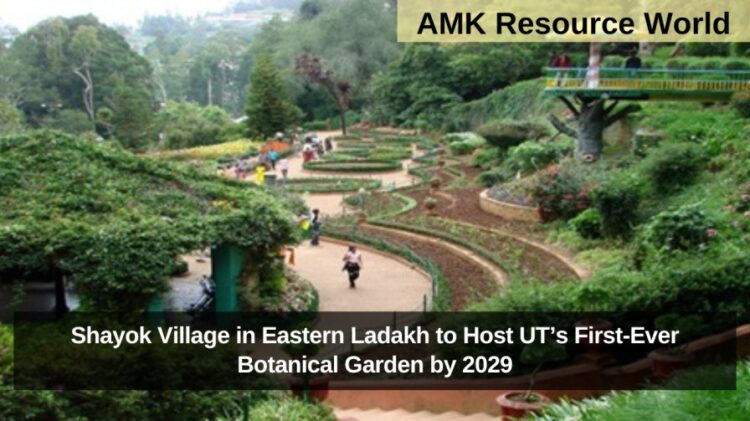
In a remarkable step towards environmental sustainability and regional development, Shayok village in eastern Ladakh — located strategically en route to the Galwan Valley — is all set to become home to the Union Territory’s first-ever botanical garden. The ambitious initiative will see the transformation of 10 hectares of barren community land into a thriving conservation space dedicated to native fruits, medicinal plants, and the distinctive flora and fauna of the high-altitude Himalayan region.
This visionary project is being developed under the guidance of the Leh Hill Council, with key support from the Command Area Development department. Civil works have already commenced, including critical tasks such as land tilling and the construction of water reservoirs, all facilitated through an initial funding of ₹1 crore. These infrastructural efforts lay the foundation for what is intended to be a rich and biodiverse ecological sanctuary by the target completion year of 2029.
Tashi Namgyal Yakzee, the elected Councillor of the area, has further bolstered the project by funding a solar-powered water pumping system. This sustainable water supply mechanism will be crucial in maintaining the delicate ecological balance and ensuring continuous irrigation for the plants, especially in Ladakh’s harsh and arid climate.
The botanical garden is also a flagship component of the “Go Green Go Organic” initiative spearheaded by Drikung Kyabsgon Chetsang Rinpoche, a spiritual leader committed to environmental conservation and sustainable living. Under his vision, the garden will not only function as a conservation and educational site but may also evolve into a unique Battlefield Tourism destination, capitalizing on its proximity to historically significant locations like the Galwan Valley.

The garden will host a diverse range of fruit-bearing trees such as apricots and apples, medicinal herbs traditionally used in Tibetan and Ladakhi medicine, native mountain flora, and an impressive collection of Ladakhi rock varieties. This will make it a valuable ecological resource for researchers, students, and tourists interested in Himalayan biodiversity.
Moreover, the project aims to provide livelihood opportunities for local residents through eco-tourism and horticulture. It is expected to serve as a model for sustainable land use, offering both environmental and economic benefits in a region that is ecologically sensitive and often challenged by climatic extremes.
Once completed, the Shayok Botanical Garden will stand as a testament to Ladakh’s commitment to ecological preservation and innovative community development. It will be a first-of-its-kind initiative not just for Ladakh, but for high-altitude desert regions across India, setting a precedent for future conservation efforts in similar geographies.
As Ladakh continues to balance development with environmental stewardship, the Shayok Botanical Garden promises to be a green jewel in the high Himalayas — nurturing nature, culture, and community for generations to come.