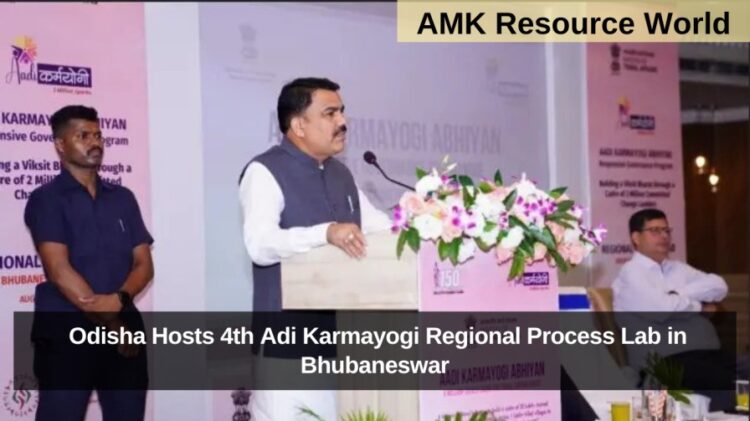
In a landmark effort to promote responsive and participatory governance among tribal communities, Odisha hosted the 4th edition of the Adi Karmayogi Regional Process Lab (RPL) in Bhubaneswar. This week-long residential programme, held under the banner of the Dharti Aaba Janjatiya Gram Utkarsh Abhiyan (DAJGUA), brought together 25 carefully selected tribal governance functionaries from the states of Jharkhand, Bihar, and Odisha.
Facilitated by the Bharat Rural Livelihoods Foundation (BRLF), the RPL serves as a vital platform for strengthening tribal leadership at the grassroots level. The primary aim of the initiative is to build a cadre of empowered, well-informed tribal leaders and local functionaries who can drive change in their respective communities by upholding democratic values, strengthening governance institutions, and ensuring access to rights and entitlements.
The participants of the 4th RPL were nominated from diverse tribal regions and play critical roles at the village level—as ward members, sarpanches, panchayat secretaries, SHG leaders, and youth representatives. Throughout the programme, they engaged in interactive sessions, field visits, and thematic workshops designed to deepen their understanding of governance processes, community mobilization, and rights-based development.

What sets the RPL apart is its cascading capacity-building model. The current participants are being mentored by a group of State Master Trainers (SMTs)—individuals who were themselves trained through earlier labs and who now serve as facilitators. This peer-learning methodology not only strengthens the sustainability of the initiative but also ensures that the programme’s outcomes ripple across different layers of governance. Following the RPL, these SMTs will lead State and District-level Process Labs, thereby scaling the impact across a wider geography and bringing in more tribal communities into the fold of empowered self-governance.
The RPL curriculum focuses on several key themes, including Panchayati Raj systems, land rights, forest governance, tribal welfare schemes, convergence planning, and social accountability tools. By grounding participants in both technical knowledge and transformative leadership practices, the lab is fostering a new generation of tribal leaders who are equipped to address the systemic challenges faced by Adivasi communities.
Odisha, a state with a significant tribal population, provided a fitting backdrop for the lab. With its rich tribal heritage and proactive government schemes, Odisha is emerging as a hub for tribal empowerment innovations. Hosting the RPL in Bhubaneswar also allowed for deeper institutional collaboration and visibility for the DAJGUA initiative.
As India continues its efforts towards inclusive development and tribal empowerment, programmes like the Adi Karmayogi Regional Process Lab under DAJGUA are becoming critical levers of change. With tribal voices being nurtured and amplified at the grassroots, the vision of self-reliant, self-governed tribal villages is becoming a tangible reality.