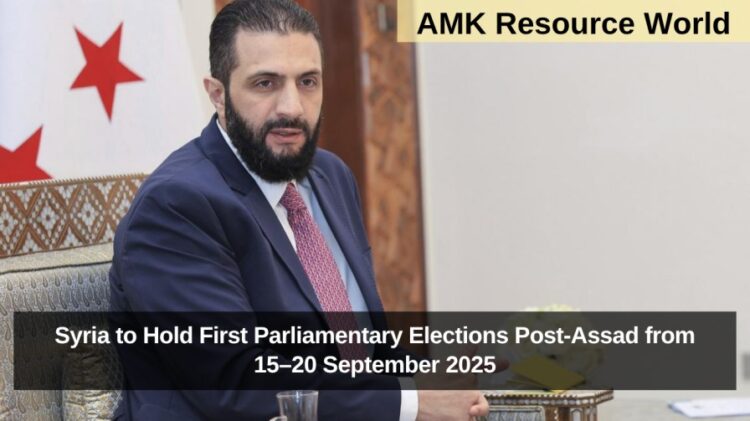
Syria is set to hold its first parliamentary elections since the fall of longtime president Bashar al-Assad, marking a pivotal moment in the war-torn nation’s journey toward political reconstruction and stability. Scheduled from 15–20 September 2025, the elections will take place under the leadership of interim President Ahmad al-Sharaa, appointed following a transitional agreement earlier this year.
These elections are being conducted under a temporary constitution adopted in March 2025, which outlines the creation of a new People’s Assembly comprising 210 seats. According to the framework, one-third of the seats will be appointed by the interim administration, while the remaining two-thirds will be filled through elections via provincial electoral colleges. This hybrid model aims to balance inclusivity with stability during the transition period.
The polls are widely seen as a crucial step toward drafting a permanent constitution and restoring representative governance in Syria after more than a decade of civil war, foreign interventions, and authoritarian rule. However, serious challenges threaten to overshadow the process.

Sectarian violence continues to plague several parts of the country, particularly in Sweida, where tensions between Druze communities and rival factions have escalated. There have also been disturbing reports of continued atrocities by remnants of the former government forces, raising concerns about voter safety and the fairness of the election environment.
In addition, Israeli military actions, mainly targeting Iranian-backed militia infrastructure in Syria, add to the region’s volatility. These strikes, while focused on curbing Iran’s influence, risk destabilizing areas already fragile from years of conflict and displacement.
Despite these hurdles, the interim administration insists that the elections will proceed as planned. United Nations observers and regional monitors are expected to oversee the process to ensure transparency and legitimacy, though their access remains limited in some contested areas.
If successful, these parliamentary elections could pave the way for national reconciliation and a permanent political settlement. The formation of a new, inclusive legislative body may facilitate dialogue among Syria’s diverse ethnic and sectarian groups and set the foundation for drafting a permanent constitution.
While the road to stability remains fraught with complexities, the upcoming elections represent a tentative yet hopeful step toward ending Syria’s prolonged political and humanitarian crisis.