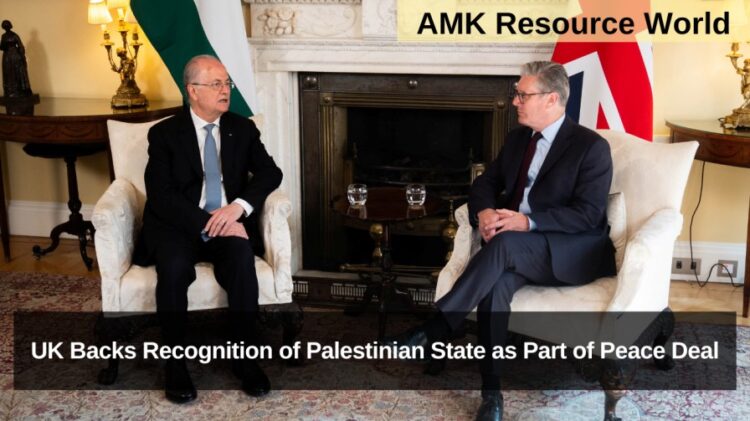
The United Kingdom has formally signalled its willingness to recognise a Palestinian state as part of a comprehensive peace agreement between Israel and Palestine. Prime Minister Keir Starmer, navigating internal party divisions and international diplomatic pressure, reiterated that Palestinian statehood must be pursued in tandem with a wider peace framework and sustained humanitarian ceasefire efforts.
Speaking before Parliament, Starmer affirmed that recognition of Palestine was not just a symbolic gesture, but a necessary component of a durable two-state solution. “Recognition must be part of a process that delivers a just and lasting peace for both Israelis and Palestinians,” he said. “It cannot happen in a vacuum or without guarantees of long-term security and dignity for all.”
The UK’s position, while aligning with much of the international consensus—including UN resolutions and positions held by several European allies—stops short of immediate unilateral recognition. Instead, the Starmer government is pushing for a multilateral approach that supports diplomatic engagement, ceasefire negotiations, and reconstruction efforts in Gaza and the West Bank.

The move comes amid increasing Labour Party pressure, especially from progressive MPs and grassroots members, who have long called for recognition of Palestinian statehood irrespective of Israeli agreement. Starmer’s more centrist stance, however, emphasises pragmatism over political symbolism, seeking to balance historical Labour support for Palestinian rights with a commitment to Israel’s security and a peaceful resolution.
Internationally, the UK’s announcement has been met with cautious optimism. The Palestinian Authority welcomed the statement as a positive step but urged London to follow through with immediate recognition to strengthen Palestinian diplomatic standing. Meanwhile, Israeli officials expressed concern, warning that premature recognition without negotiated terms could derail peace prospects and embolden extremist factions.
Diplomatic analysts suggest that the UK’s move is designed to restore Britain’s credibility in Middle East diplomacy, particularly after its diminished influence post-Brexit. By tying recognition to peace and ceasefire efforts, the UK hopes to position itself as a constructive actor capable of bridging divides and supporting a path to coexistence.
As humanitarian conditions in Gaza continue to deteriorate and international calls for a ceasefire grow louder, the UK’s calibrated support for Palestinian statehood—conditional but principled—reflects a strategic attempt to revive a long-stalled peace process while maintaining diplomatic balance.