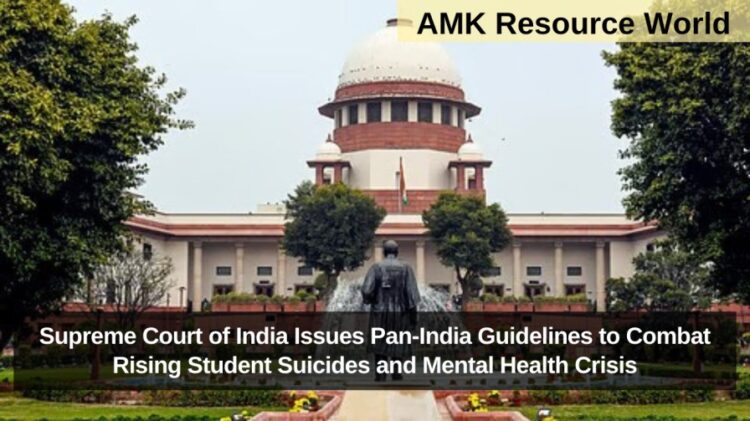
In a landmark judgment aimed at tackling the growing mental health crisis among students, the Supreme Court of India on Friday issued pan-India guidelines to address rising cases of suicides and psychological distress in educational institutions. A bench comprising Justices Vikram Nath and Sandeep Mehta emphasized that the country is suffering from a “legislative and regulatory vacuum” in terms of a unified and enforceable framework to prevent student suicides, particularly in schools, coaching centres, and other student-centric environments.
The court observed that mental health issues among students have surged in recent years due to academic pressure, isolation, and lack of institutional support. In response, the bench issued 15 comprehensive guidelines that all educational institutions must implement. These will remain binding until appropriate legislation is enacted by competent authorities.
Among the key directives is the mandatory adoption of a uniform mental health policy across all institutions, guided by the “Ummeed” draft guidelines, the “Manodarpan” initiative, and the National Suicide Prevention Strategy. The court ordered that this policy be reviewed and updated annually, and made publicly accessible on institutional websites and notice boards to ensure transparency and accountability.

The “Ummeed” framework—an initiative launched in 2023 by the Ministry of Education—stands for Understand, Motivate, Manage, Empathise, Empower, and Develop, focusing on proactive mental health interventions in schools. In addition, “Manodarpan”, introduced during the COVID-19 pandemic, continues to support student well-being through psychological counseling and awareness campaigns.
Recognizing the lack of professional mental health support in many institutions, the court ruled that all institutions with 100 or more students must engage at least one qualified counselor, psychologist, or social worker trained in adolescent mental health. Institutions with fewer students must create formal referral linkages with external mental health professionals to ensure timely intervention.
To prevent impulsive self-harm, particularly in residential institutions, the Supreme Court mandated the installation of tamper-proof ceiling fans and restricted access to rooftops, balconies, and other high-risk areas.
The verdict came while hearing an appeal against an Andhra Pradesh High Court decision related to the death of a 17-year-old NEET aspirant in Vishakhapatnam. The case underscored the urgent need for mental health safeguards and institutional accountability.
This judgment sets a significant precedent, marking the judiciary’s proactive role in addressing student mental health and mandating a systemic, nationwide response.