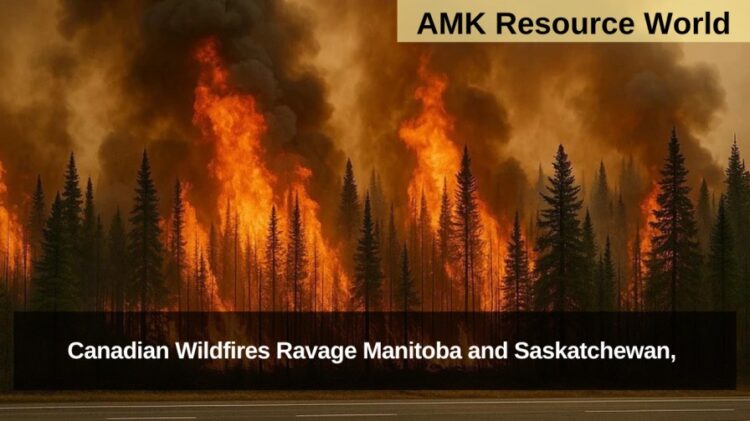
Canada continues to grapple with one of its worst wildfire seasons on record, as blazes across provinces like Manitoba and Saskatchewan scorch millions of hectares, forcing widespread evacuations and prompting states of emergency. Fueled by hot, dry conditions and shifting winds, the wildfires have intensified over recent weeks, posing a severe threat to rural communities, wildlife, and critical infrastructure.
As of July 2025, officials report that over 2.3 million hectares of forested land have been consumed in Saskatchewan alone, with Manitoba seeing more than 1.5 million hectares burned. Thick smoke has blanketed towns and cities, triggering air quality warnings across large swaths of central Canada and even affecting neighboring U.S. states.
Emergency declarations have been issued by provincial authorities to expedite firefighting resources and coordinate evacuation efforts. Dozens of communities, including several First Nations reserves, have been evacuated as fires encroach dangerously close to homes and essential services. Many residents have been relocated to temporary shelters in nearby cities, where they face uncertainty about when — or if — they will be able to return.

The Canadian Interagency Forest Fire Centre (CIFFC) has deployed thousands of firefighters, supported by military units and international teams from countries such as Australia and the United States. However, the scale and intensity of the fires have overwhelmed containment efforts in several regions. “We are in a state of constant emergency,” said Saskatchewan’s Public Safety Minister, adding that climate change is creating longer, more destructive fire seasons across the country.
Scientists warn that the current wildfire crisis is part of a growing pattern tied to global warming. Rising temperatures, earlier snowmelts, and prolonged droughts are creating ideal conditions for fires to ignite and spread rapidly. Manitoba and Saskatchewan, traditionally less fire-prone than provinces like British Columbia, are now seeing unprecedented wildfire activity.
Beyond immediate threats to life and property, the fires are also devastating local ecosystems, displacing wildlife, and releasing massive amounts of carbon into the atmosphere. Agricultural communities are facing crop losses and livestock threats, adding economic strain to environmental catastrophe.
With no significant rainfall forecast in the coming weeks, authorities warn that the situation could worsen. Canadians across the nation are being urged to follow evacuation orders, support affected communities, and prepare for what may become the new normal in a warming world.