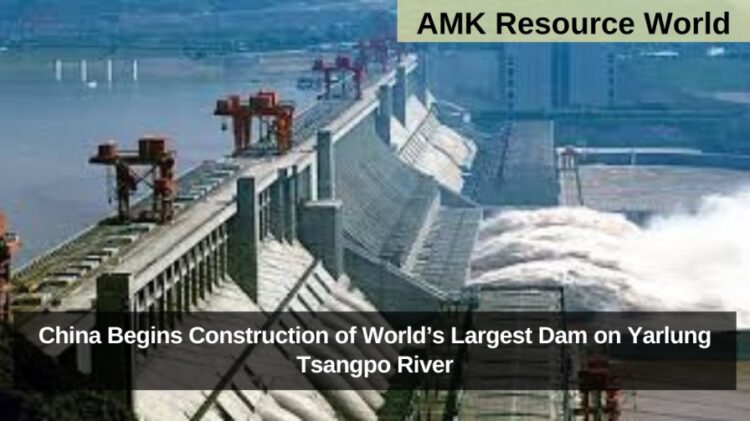
China has initiated the construction of the Motuo Hydropower Station on the Yarlung Tsangpo River in the Tibet Autonomous Region, a project set to become the world’s largest dam. With a staggering estimated cost of $167 billion, the mega infrastructure venture involves diverting the river’s natural flow through underground tunnels to generate electricity through five cascading power stations. The dam forms a critical component of China’s long-term energy strategy to increase renewable power capacity and reduce carbon emissions. However, the project has sparked serious geopolitical and environmental alarm in neighbouring countries, particularly India and Bangladesh.
The Yarlung Tsangpo, known as the Brahmaputra River in India and Jamuna in Bangladesh, is a transboundary river vital to the livelihoods of millions. The upstream construction has triggered fears over China’s control of water resources, especially during dry seasons or periods of political tension. Experts warn that China could potentially regulate water flow to the downstream nations, impacting agriculture, fisheries, and water security in India’s northeastern states and in low-lying Bangladesh.
Beyond geopolitics, the project raises grave environmental concerns. The Motuo region is one of the most ecologically fragile zones, home to rare flora and fauna, including species unique to the Eastern Himalayas. Diverting the river flow and altering the hydrology of the region could have irreversible impacts on biodiversity. Furthermore, environmentalists point out that the area falls in a high-seismic zone, making the massive construction highly vulnerable to earthquakes and landslides, posing risks not just to local ecosystems but also to human settlements.

India has expressed its apprehensions about the project through diplomatic channels, emphasizing the need for prior consultation and transparency over transboundary water projects. Bangladesh, too, has raised concerns over potential changes in river flow affecting its vast deltaic system.
While China promotes the Motuo project as a green energy milestone, its unilateral approach to harnessing an international river system has ignited debate over equitable river governance. As the construction progresses, it remains to be seen how China addresses the region’s sensitive environmental balance and the water-sharing concerns of its neighbors. The Motuo Hydropower Station has thus emerged not just as a feat of engineering, but as a defining geo-environmental and strategic challenge in South Asia.