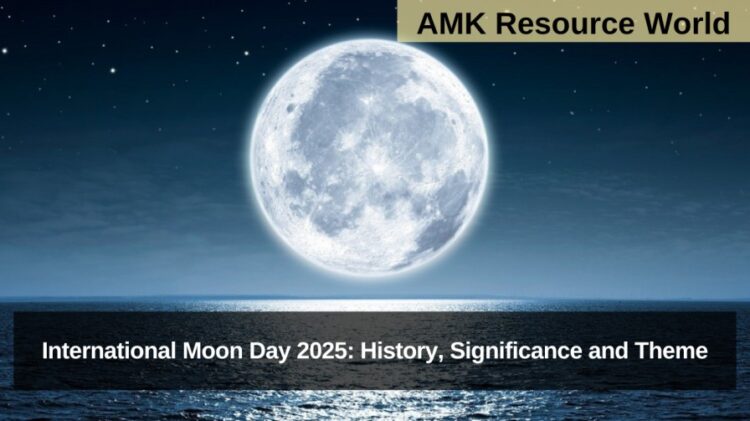
International Moon Day 2025, observed on July 20, marks a global celebration of humanity’s achievements in lunar exploration and our aspirations for future space missions. The date commemorates one of the most historic moments in science and human history—the first human landing on the Moon by NASA’s Apollo 11 mission on July 20, 1969. Astronaut Neil Armstrong’s famous words, “That’s one small step for man, one giant leap for mankind,” echo the spirit of this day.
The United Nations officially recognized International Moon Day in 2021, upon the recommendation of the Moon Village Association (MVA) and with support from member states, to promote education, awareness, and international cooperation in lunar science and exploration. The annual observance encourages global participation in discussions, exhibitions, and outreach activities focused on the Moon and outer space.
HISTORY AND SIGNIFICANCE
International Moon Day celebrates the legacy of Apollo 11 while recognizing ongoing and upcoming missions by space agencies such as NASA, ISRO, ESA, CNSA, and private players in space technology. The Moon has always held a special place in human culture and curiosity. Over the decades, it has become a focal point for scientific study, technological innovation, and geopolitical cooperation.

The Moon is now central to future space exploration strategies. Missions like NASA’s Artemis, ISRO’s Chandrayaan series, and international lunar gateway projects are laying the groundwork for long-term human presence on the Moon. These endeavors not only boost scientific knowledge but also encourage sustainable exploration, technological development, and potential economic opportunities.
THEME OF INTERNATIONAL MOON DAY 2025
While the official theme for International Moon Day 2025 is yet to be confirmed, recent themes have focused on inclusivity, sustainability, and innovation in lunar exploration. The 2025 theme is expected to highlight the importance of international partnerships, technological advancement, and responsible lunar exploration, in line with the growing global interest in building permanent lunar infrastructures.
International Moon Day is more than a tribute to the past; it is a call to the future. It reminds us of how far humanity has come—and how much further we can go—through science, unity, and imagination. As we prepare for new lunar milestones, this day serves to inspire the next generation of scientists, engineers, and dreamers to reach for the Moon—and beyond.