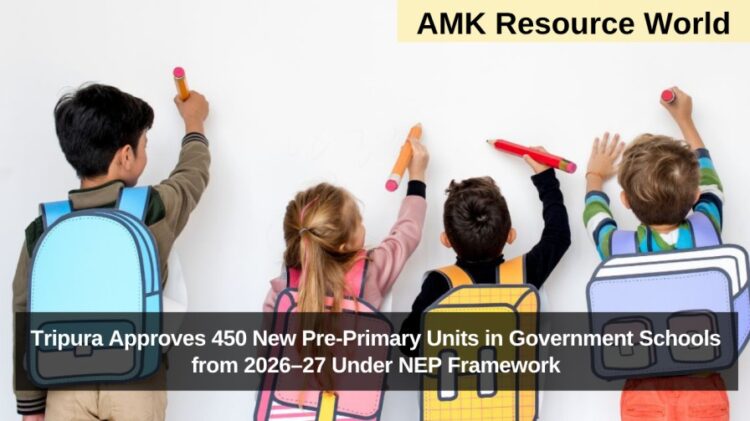
The state of Tripura has taken a major step toward strengthening early childhood education by approving the introduction of pre-primary units in 450 government schools from the 2026–27 academic session. This move significantly expands access to foundational learning, aligning with the vision of the National Education Policy (NEP) 2020, which prioritizes early years education as the cornerstone of academic success.
With this expansion, the total number of pre-primary facilities in government schools will rise to 695, marking a remarkable transformation from just 9 such institutions in 2018. The initiative reflects Tripura’s accelerated efforts to integrate nursery-level education into the formal school system, particularly targeting remote and underserved regions.
Tripura Pre-Primary Expansion – Key Highlights
- 450 new pre-primary units approved for 2026–27
- Total units to reach 695 government schools
- Significant growth from only 9 units in 2018
- Coverage expected across 4,800 schools statewide
- Focus on rural and underserved areas
Schools have been directed to prepare for nursery admissions from the upcoming academic session, ensuring coordination among teachers, administrators, parents, school management committees, and local bodies.
NEP 2020 Driving Early Education Reform
The expansion is rooted in the National Education Policy (NEP), which emphasizes Early Childhood Care and Education (ECCE) as critical for cognitive and social development. By introducing structured pre-primary education in government schools, Tripura aims to:
- Strengthen foundational literacy and numeracy
- Improve student enrollment at an early stage
- Enhance retention rates in later grades
- Create a smooth academic transition from nursery to primary education
The NEP recommends universal access to quality early education for children aged 3–6 years, and Tripura’s initiative is a direct step toward achieving this national goal.
Implementation and Monitoring Mechanism
To ensure effective rollout, the state has established a robust monitoring framework:
- District Education Officers (DEOs) will oversee implementation
- Regular progress reports must be submitted
- Schools must report operational challenges promptly
- Administrative support will be provided at district levels
This structured approach aims to prevent delays and maintain quality standards across all newly introduced units.
Impact on Education System in Tripura
The initiative is expected to bring transformative changes in the state’s education system:
- Increased early enrollment in government schools
- Reduced dropout rates in higher classes
- Better learning outcomes through early intervention
- Strengthening of public education infrastructure
By mainstreaming pre-primary education, Tripura is effectively redefining the entry point of formal schooling, making it more inclusive and development-oriented.
Quick Reference Summary

| Aspect | Details |
| State | Tripura |
| New Units Approved | 450 |
| Total Pre-Primary Units | 695 |
| Academic Session Start | 2026–27 |
| Policy Framework | National Education Policy (NEP 2020) |
| Monitoring Authority | District Education Officers (DEOs) |
| Total Schools in State | ~4,800 |
Why This Move Matters for Students and Parents
For parents and young learners, this expansion ensures:
- Access to quality early education within local schools
- Reduced need for private nursery schooling
- Better preparation for primary education
- Enhanced learning environment from an early age
Frequently Asked Questions (FAQs)
| What is the new announcement by Tripura government regarding schools? |
| Tripura has approved 450 new pre-primary units in government schools from the 2026–27 academic session. |
| How many total pre-primary units will be available after expansion? |
| The total will increase to 695 units. |
| What policy is driving this expansion? |
| The initiative is based on the National Education Policy (NEP) 2020. |
| Who will monitor the implementation of the plan? |
| District Education Officers (DEOs) will oversee and report progress. |
| When will nursery admissions begin? |
| Admissions are expected to begin from the 2026–27 academic session. |
| Why is early childhood education important? |
| It helps build foundational literacy, improves retention, and enhances overall learning outcomes. |
| How many schools are there in Tripura? |
| There are approximately 4,800 schools in the state. |
| What is the main goal of this initiative? |
| To strengthen foundational learning and increase enrollment in government schools. |
The Tripura government’s expansion of pre-primary education marks a significant milestone in aligning state education systems with the NEP 2020 vision. By introducing 450 new pre-primary units, the state is taking a proactive step toward ensuring equitable access to early education and improving long-term academic outcomes. For the latest updates and official notifications, visit the relevant state education portals and bookmark this page for continuous updates.