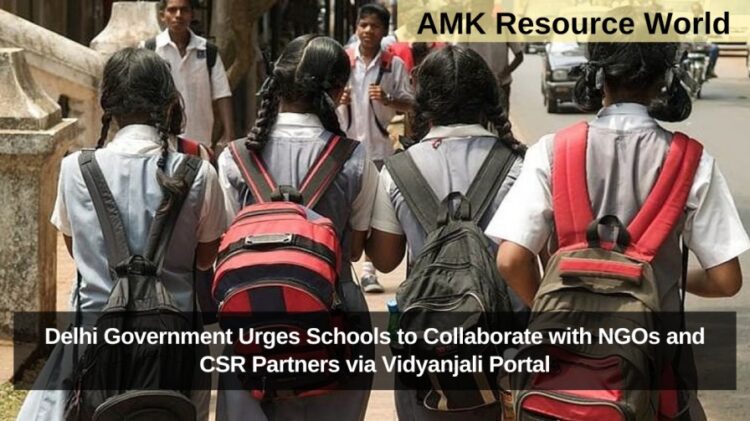
In a progressive move to strengthen community participation and collaboration in education, the Delhi government has instructed all its schools to engage actively with non-governmental organisations (NGOs) and corporate social responsibility (CSR) partners through the Vidyanjali portal. The platform, an initiative of the Central Government’s Ministry of Education, aims to foster meaningful partnerships between schools and external stakeholders to enhance educational quality and infrastructure.
Strengthening NEP 2020’s Vision of Collaborative Education
According to a circular issued by the Directorate of Education (DoE), this directive aligns with the National Education Policy (NEP) 2020, which highlights volunteerism, collaboration, and community involvement as essential drivers of educational transformation. The Vidyanjali platform enables individuals, NGOs, and CSR organisations to contribute their resources, expertise, and support directly to schools across Delhi.
The DoE circular stated that Delhi government and aided schools can now receive external support through this platform in various forms — from infrastructure enhancement and teacher training to skill development programmes and classroom resources.
Ensuring Data Privacy and Responsible Collaboration
The circular further underscores the need to maintain strict confidentiality of students’ personal and sensitive data while engaging with external partners. School heads and principals have been advised to adhere to the data protection norms outlined by the Department of School Education and Literacy (DoSEL) under the Ministry of Education.
To streamline partnerships, the recently launched “Adopt-a-School” module on the Vidyanjali portal allows CSR entities and NGOs to form long-term collaborations for infrastructure development, digital empowerment, and resource enhancement in government schools.
Adopt-a-School Module: A Step Towards Sustainable Partnerships
The concept note for the Adopt-a-School module, released on January 20, 2025, after a meeting chaired by the Economic Adviser, formalises partnerships between schools and CSR contributors. Under this framework, school heads are authorised to approve CSR proposals based on institutional needs without seeking separate permission from the Directorate for smaller-scale projects.

However, for major works such as construction of classrooms, laboratories, or toilets, prior approval from the Directorate through the e-office system remains mandatory. This ensures transparency and proper oversight in large-scale collaborations.
Streamlined Process Through the Vidyanjali Portal
All CSR proposals must be processed exclusively via the Vidyanjali portal, where both schools and CSR contributors complete the required documentation. The DoE also recommends that new assets procured under CSR initiatives include manufacturer warranties to ensure long-term maintenance, while Composite School Grant funds may be used for upkeep when necessary.
Once a project receives state-level clearance on the portal, CSR partners can extend their contributions through activities, sponsorships, capacity-building initiatives, or direct asset donations. This digital and transparent approach is expected to significantly boost public-private collaboration in Delhi’s education ecosystem.
Building a Stronger Future for Delhi’s Schools
By promoting the use of the Vidyanjali platform, the Delhi government is creating a structured channel for CSR-driven educational development. This initiative not only bridges resource gaps in public schools but also encourages corporate and community engagement in shaping the future of students.
As Delhi moves forward with this initiative, the integration of CSR, NGO support, and government schools through the Vidyanjali portal could become a model of inclusive and participatory education for other states across India.